
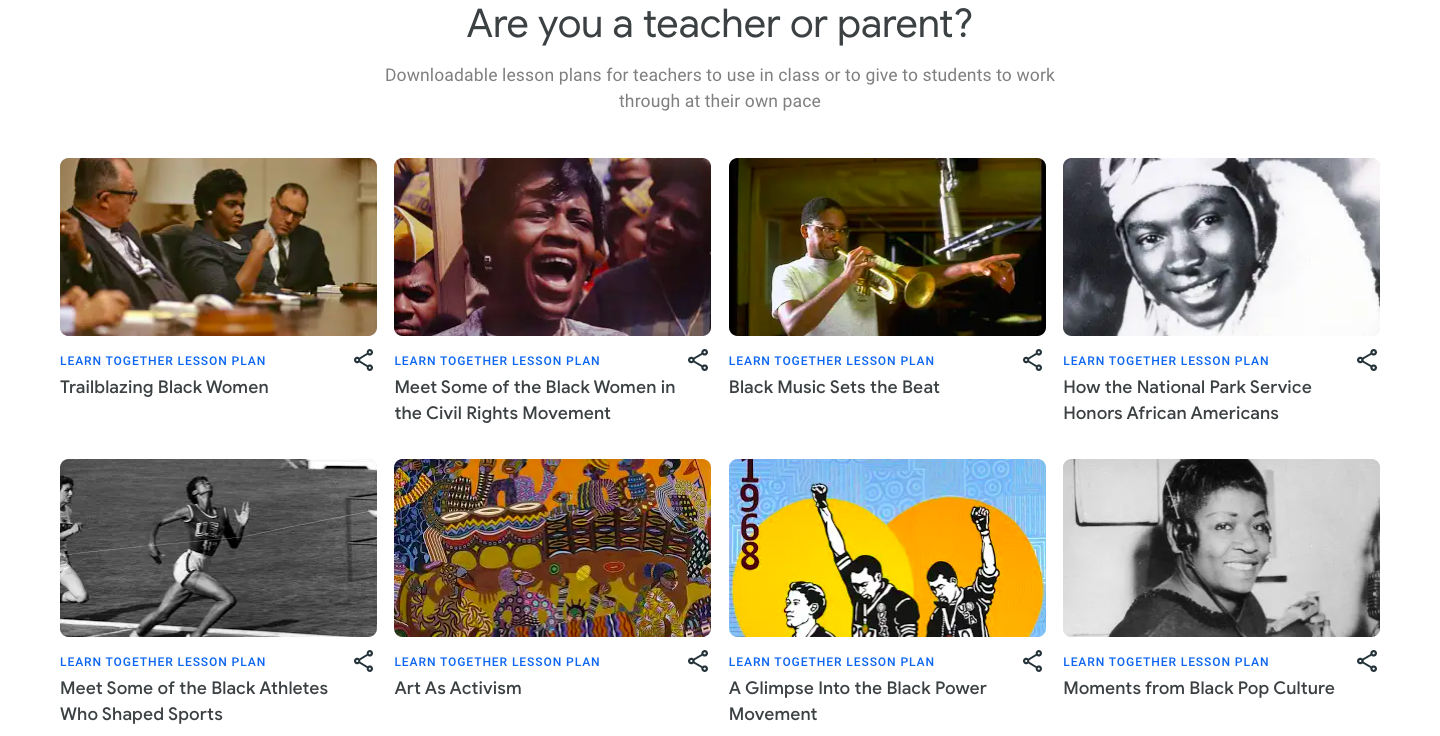
Today our nation is struggling more than ever to understand the different perspectives and plights of the various cultures who encompass it. African Americans in particular are still battling the injustices afforded to them over one hundred and fifty years after the abolishment of slavery in the United States. The Black History and Culture digital exhibit produced by Google Arts and Culture seeks to make the Black American experience free and available for all. This exhibit boasts an astonishingly diverse array of collections with contributions from eighty-seven different museums, archives, broadcast networks, and foundations including the Museum of African American Art and the US National Archives, just to name a few. This evolving exhibit contains themed and detailed collections that utilize images, archival footage, original audio, historian commentary, original videos, interactive maps, virtual tours, and even downloadable lesson plans to engage the audience. Plus, it is all free to share on social media platforms and even Google Classroom.
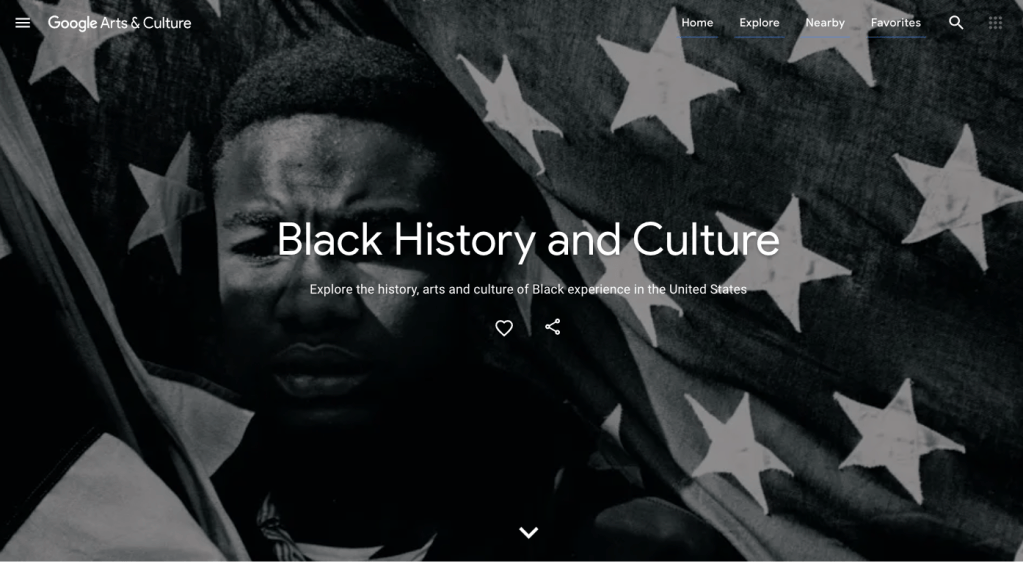
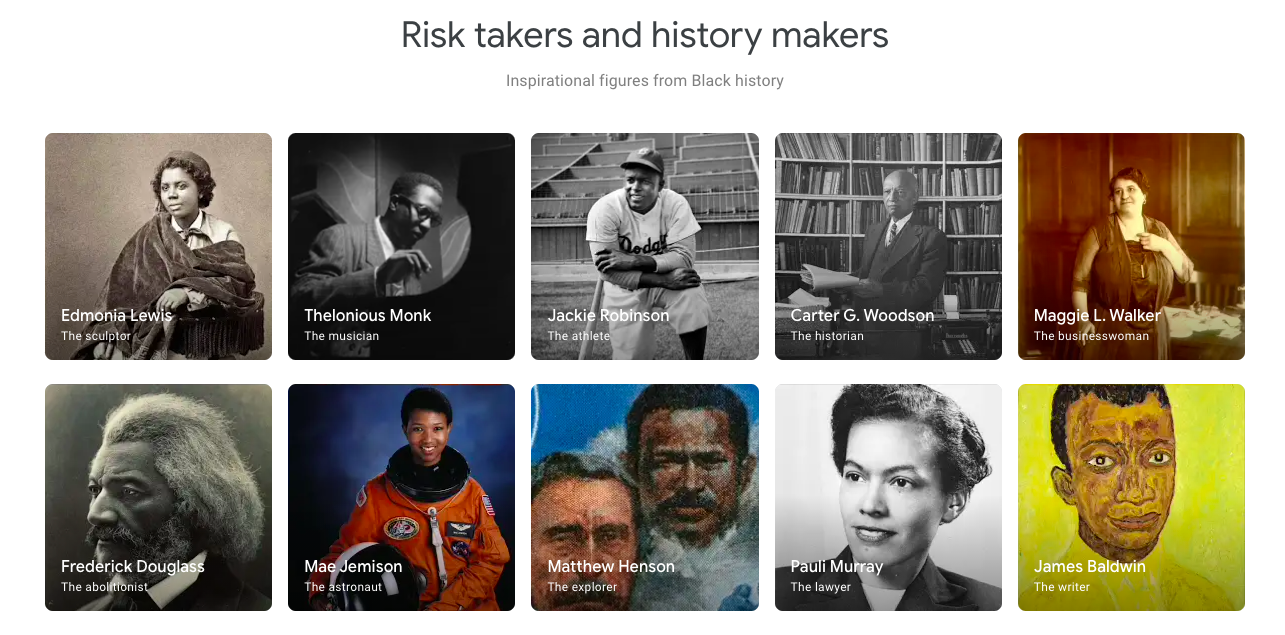
The exhibit collections are organized by themes that range from history, lineage, struggles, arts, contributions, war, music, politics, activism, biographies, gender, geography, and even culinary elements of African American culture. The exhibit briefly focuses on the approximate twelve million Africans kidnapped through the transatlantic slave trade and dispersed into American and Caribbean slavery between 1526 and the mid-1800s and their captor’s implements to prevent enslaved uprisings until the practice was abolished in 1865. The Jim Crow south and the Civil Rights movement in the 1950s and 60s are extensively covered including the lives, accomplishments, and sacrifices of key figures such as Dr. Martin Luther King, Jr., Rosa Parks, and Ella Baker. Biographies of African Americans that had historical impacts in their times such as Frederick Douglass, Harriet Tubman, Pauli Murray, and James Baldwin are all also key aspects of the exhibit. The scope of the site spreads to the sports heroes, pop culture icons, and art from the Harlem Renaissance of the mid-1930s to the Black Renaissance movement of today. The exhibit encompasses the experience of black men and women in America from every moment in American History in various places and circumstances.
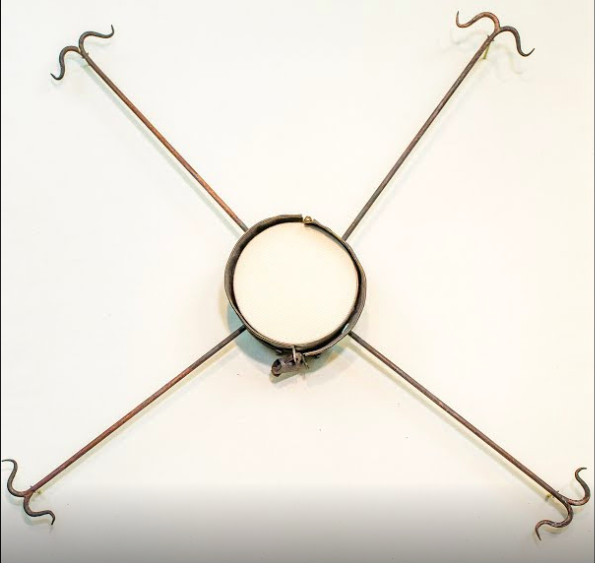
Slave Collar
DuSable Museum of African American History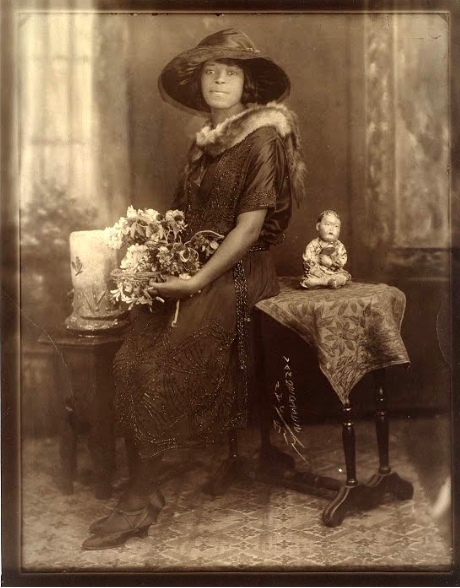
Evening Attire (1922)
by James VanDerZee Smithsonian American Art Museum
The purpose of this exhibit is preserve Black History and culture and make it available to the world free of charge. That is wholly the main goal with the Google Art & Cultures project. It’s altruistic accessibility and willingness to inform warmly invites anyone and everyone to explore and learn. Any material from any exhibit collection can instantly be shared via link, Facebook, Twitter, Pinterest, Tumblr, Vkontakte, email, and even Google Classroom. It’s designed lesson plans (see below), museum tours, archival access, clear visual themes, and online tools also make this site an excellent resource for American History teachers to utilize for engaging their students in the African American History; a welcomed gift of support with the new reality of the virtual classroom.
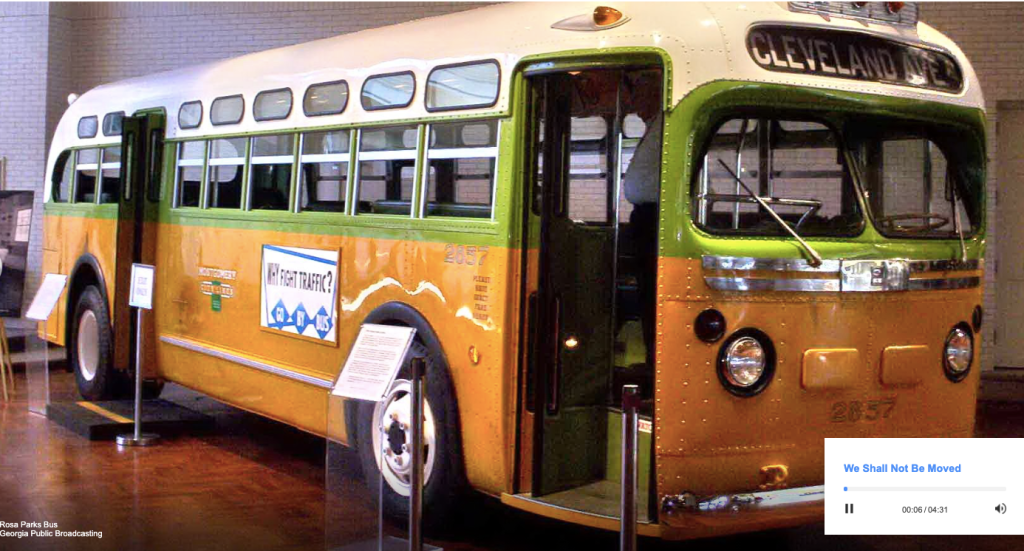
There is a variety of source material woven into the collections as well. Google and their eighty-seven donors piece together images of original documents, artifacts, people, and events while incorporating documentary videos, archival footage, and original audio. The Activists Take A Stand For Justice collection is one of many that coalesces all these elements as it details Rosa Parks and the beginning of the Montgomery Bus Boycott. There is sufficient material to conduct research on topics such as this, however in higher education or scholarship research, while the collections can definitely be utilized, the primary source material on specific topics may not be sufficient.
The pleasingly aesthetic layout of the exhibit is unique to Google and incredibly simple to navigate. It is broken up into topics, themes, and collections under which smaller, targeted archives are clearly titled with corresponding images ranging from beauty to poignancy. Among these neatly organized, blocked collections are punctuations of terse, gratifying historical gems that are historically alluring to the general public and historians alike. Laying eyes on Dr. Martin Luther King Jr.’s original “I Have a Dream” pages, you can watch and listen to the original 1929 RKO production of Bessie Smith performing “St. Louis Blues” , or you can watch President John F. Kennedy’s televised address the nation about the moral issue of Civil Rights from June 11, 1963 (see below) just months before his assassination. These features are powerful, effectual elements designed to pragmatize the scope of the struggle for African American equality in the most impactful way for the audience. This exhibit and the collections within Black History and Culture are effortless to navigate, explore, learn, engage with, and even share. Never fear, if you are in a hurry to locate a particular topic or are feeling a bit lost, the Google Search bar we all know and love is ever present at the top right of the exhibit page. Type in your topic of choice and it will neatly collect all the information within the exhibit and it’s contributing organizations for you.


