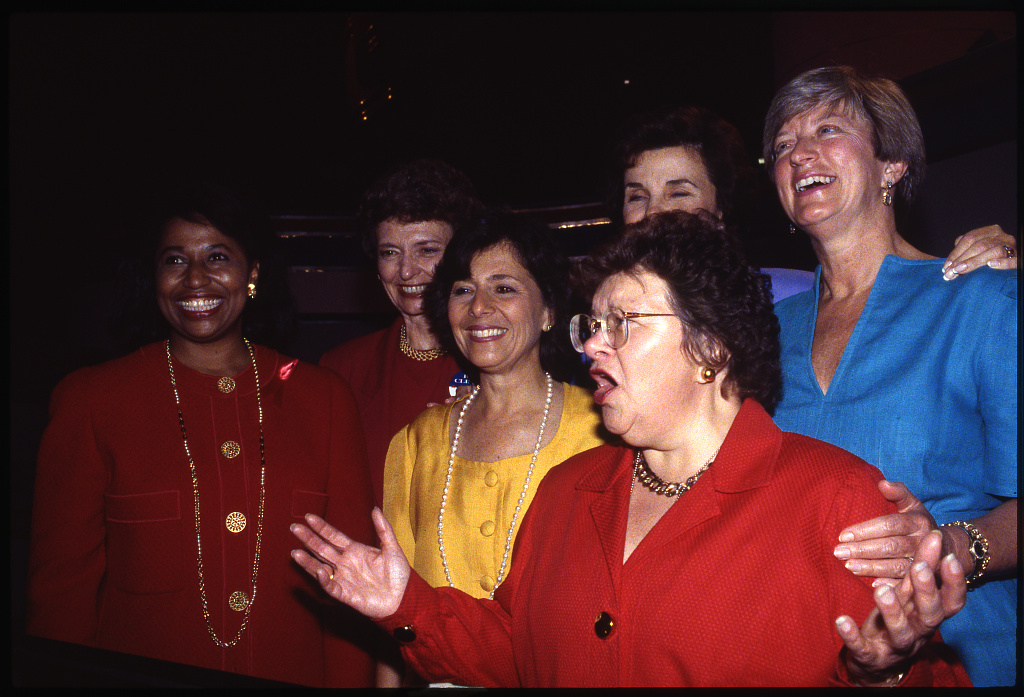
The Equal Rights Amendment (E.R.A), reintroduced in 1971, was written to be one of the most significant acts of legislation for the equality of sexes in the United States. The history of this amendment was immense, being introduced in the 1920s during the 1st wave of feminism, thanks in part to the suffrage movement, but it never passed, leaving it on the table for years until it began to resurge in popularity in the 1960s.1 The ratification of this amendment would mean that after decades of fighting and previous women’s movements, women could finally be recognized as equals under the law, something that many before had fought hard to be. The reality, however, is that the E.R.A failed by a slim majority, thanks in part to a quite powerful opposition movement, and from that day forward, the women’s movement significantly changed.2 In previous research, many attribute these changes to the difference in culture or an increasing level of intersectionality, but the change in the movement itself, as some have begun to reveal, was largely inspired by the pain and disappointment that came from the failure of the E.R.A. This failure inspired many to find another way to achieve the overarching goal of equality. Instead of following the strategies of the past, the goal shifted from grassroots political action to changing the political and representation system from the ground up to allow women to get what they deserved piece by piece. In reality, the failure of the E.R.A inspired women of the third wave of feminism to get involved with politics, government, and other underrepresented areas of society to increase representation, fight back against the belief that they couldn’t have an effect on government, and to piece by piece get the rights and representation they deserved.
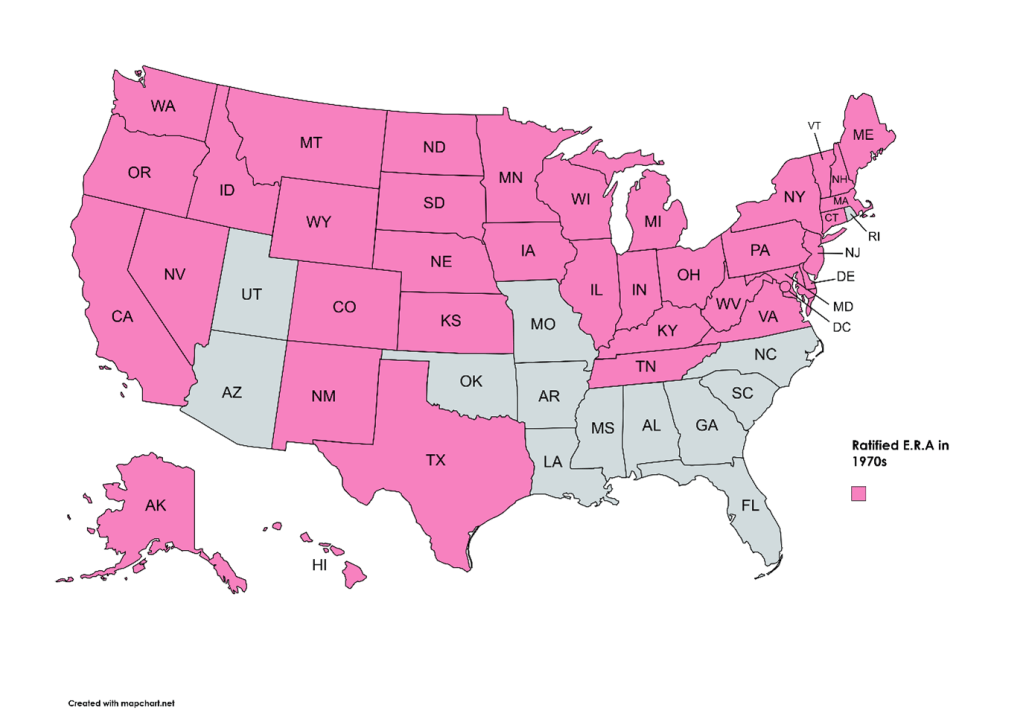
To dig into an issue like the E.R.A. or the 2nd and 3rd wave of feminism, you must understand the history of the feminist movement in the United States and how the waves changed with time. The 1st wave of feminism largely took place between the late 1800s and early 1900s with the sole goal of suffrage, or the right to vote.3 The women behind this movement were largely, if not completely, white, and many were from the upper and middle classes, even though many women worked as well. Many African American women were also involved in trying to get the vote, but they usually were segregated and looked down on. The part of the 2nd wave of feminism that focused on the E.R.A. is considered to be from the 1960s through the 1970s. The goal during this part of the wave was much harder to pin down, but the overarching goal would be equality in terms of women, for sexuality, worker rights, and even inequality with the law that still existed.4 The difference from the last wave is that the demographics were largely young to middle-aged women, a majority of whom were white, who were sick of the inequality they and their mothers had faced for decades. The 3rd wave of feminism, however, is hard to stick down to a certain demographic or issue because, compared to any other time in history, it was truly intersectional in race, religion, and age, especially in comparison to different waves. It also is hard to pick a particular issue because the movement is quite broad, but if one were to pick issues that represented the wave, abortion, intersectionality, and being represented when it came to issues surrounding their bodies were big marks for the wave. So, even though each of the waves has its own goals, these usually build off the progress that the last wave made. That is why the history and purpose of the third wave is so unique compared to the previous waves because it largely was inspired by the failure of the E.R.A. rather than taking some inspiration from the defeat.
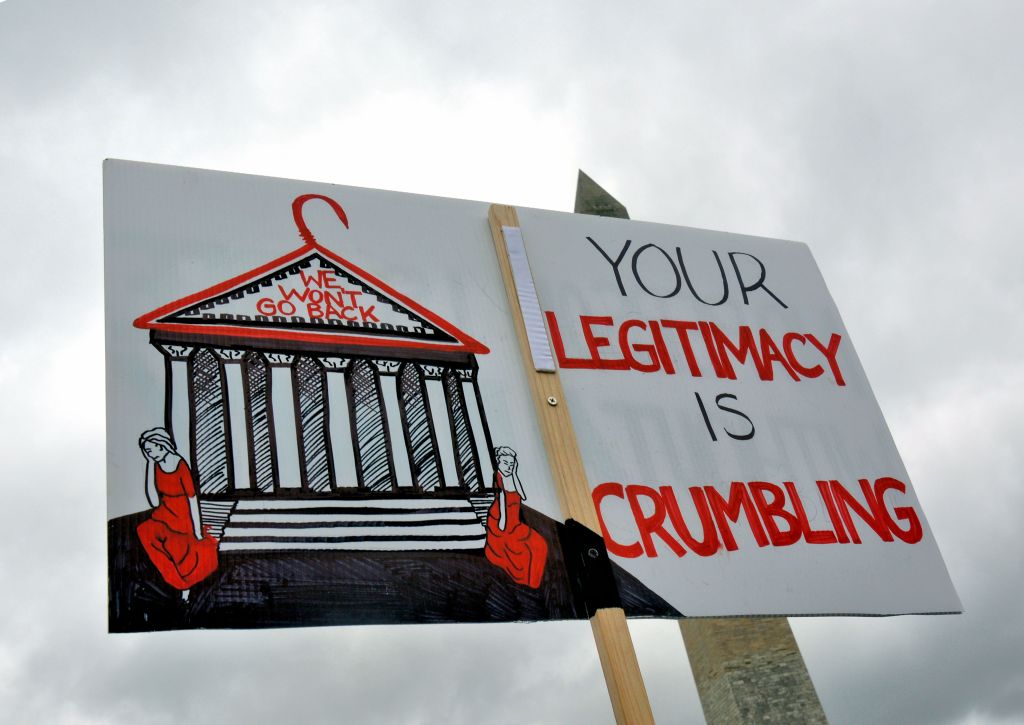
CC BY-SA 2.0 https://creativecommons.org/licenses/by-sa/2.0, via Wikimedia Commons.
Even though there are debates over the date range and content for the 3rd wave of feminism, we will be using a rough definition of a date range that is inspired by the workings of Nancy Hewitt, who wrote No Permanent Waves: Recasting Histories of U.S Feminism.5 In her book, she argues about the point of wave systems, but she denotes the 3rd wave of roughly being from the early 1990s through 2010 with the rise of the internet. This is a somewhat larger timeframe compared to other researchers, but for the sake of this paper, it is the timeframe I most agreed with. Many interpretations can be made about the 3rd wave of feminism, but the truth is that a lot of the inspiration came from the failure of the E.R.A., which brought incredible disappointment for women of the 2nd wave. This is because many of the women who comprised the third wave of the women’s movement were the daughters of the women who comprised the 2nd wave or grew up during the same time as the E.R.A., so they witnessed firsthand the pain that came when it failed. A pain that inspired many of them to take on the issues that their fellow sisters struggled with the most, which was political representation on the state and national level, and being acknowledged for the power they held as a movement when they worked together. This frustration of the system they were having to live in that didn’t recognize them as equals began to build and build until it inspired many women like Rebecca Walker, a writer, who wrote a piece called Becoming the Third Wave that can be read digitally here where she talked about the continuing inequality between the sexes in America and how enough is enough, drawing on many talking points from the original E.R.A. campaign.6 So, inspired by the failure of the E.R.A. and the unfair governmental system, women embarked on a new wave of feminism, which comprised of using systems created by the women before them to slowly get more rights until, eventually, one day in the future, women hopefully would have the full rights of equality that the E.R.A would have given them if it succeeded.
A major part of the third wave was political representation, and that was also a problem during the E.R.A ratification that contributed to its failure. In an article written for the New York Times in 1976 called Who’s Afraid of the E.R.A., prior to the initial E.RA ratification deadline. A woman wrote about the public perception of the amendment and how many women had either negative thoughts about the amendment or did not know much about it because many of the politicians and citizen action groups at the time talked about it in a way that made it seem ridiculous or heinous, especially for women.7 Many women were involved with the women’s movement, but that didn’t mean that these same women had a lot of political power or a good reputation with those in the public eye, especially when many politicians took the time to bad mouth the movement, so with no political representation and other factors, the E.R.A would fail. The third wave noticed this lack of political representation that continued into their generation, and even though many women in the 2nd wave of feminism had volunteered to become political leaders and voices like Bella Azbug, who ironically was a leader and inspiration during both the 2nd and 3rd movements, the truth is that the number of women in political positions was still somewhat sparse.8
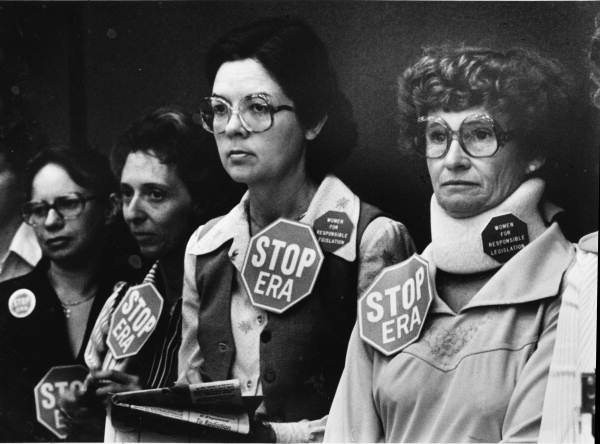
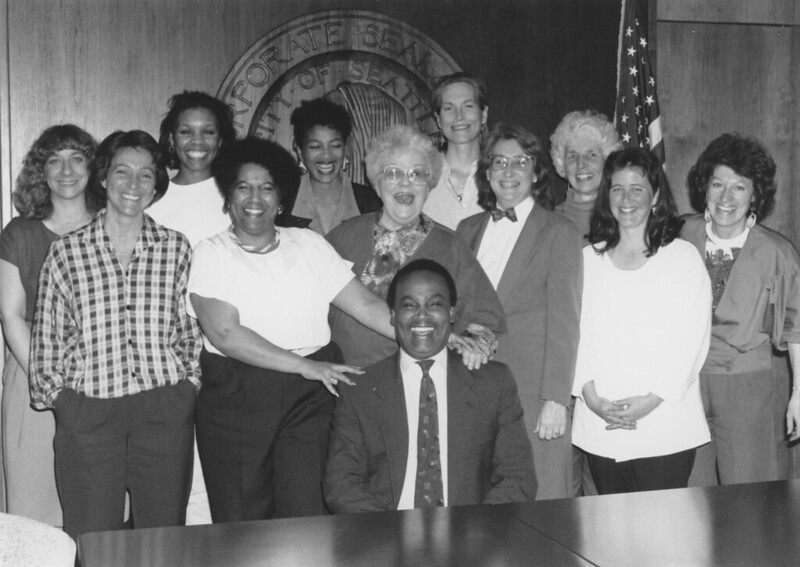
This lack of political representation that encompassed the 2nd wave of feminism changed, however, with 10 percent of lawmakers in the house being women in 1992 during the beginning of the third wave.9 This doesn’t seem like a lot for representation, but this was a large change that came along with the horrifying events of the Anita Hill testimony in 1991.10 During the E.R.A failure, it was clear that the political system was stacked against them, but the horrifying testimony of Anita Hill recalling the sexual abuse she faced in front of a panel of male politicians horrified and astonished many Americans, especially women who were watching her brave testimony and noticed a similar tone taken by media and politicians that occurred during the 2nd wave.11 Especially if you were to compare the way many in the media talked about Anita, calling her a liar and dramatic, the same way they talked about leaders of the E.R.A movement in the 1970s like Bella Abzug and Gloria Steinem.12 To the astonishment of many, especially women, they saw that her concerns and experience were thrown away by the male representatives who went on to approve Clarence Thomas to be a Supreme Court justice.13 The main problem of this case that also occurred with the failure of the E.R.A. was that there was no representation for women to have their own experience and input included on these important decisions that impacted their future. Women saw that something as serious as sexual abuse and the control of their own bodies was considered not important to male politicians who supposedly were making the best decisions for them, and inspired by the failure of the E.R.A., due to the political system being stacked against them, and the apathy towards Anita Hill, women became incredibly motivated to make sure all women’s voices were heard. Going back to the 1992 number of women serving in the House of Representatives, that was a significant increase in the number of women serving in that role, so much so that 1992 was designated as “The Year of the Women” because more women than ever were running for political office and winning their nominations.14 So, while ten percent doesn’t seem like a large number, the truth is that it gave women around the country a voice they didn’t have before and a percentage that showed they could make decisions on behalf of themselves. So, even though full equality was not reached, a future that was more equal could be seen on the horizon.
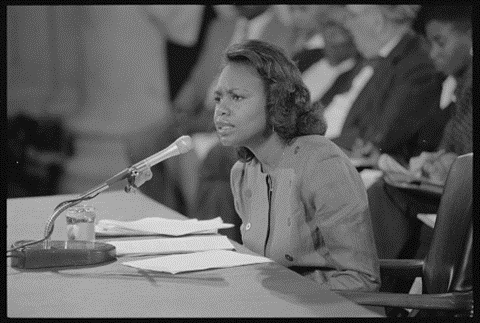
As women were gaining physical representation in government, the third wave was also trying to regain momentum and power to showcase to those already in office that they still had significant power when it came to deciding on issues or electing candidates. During the ratification process of the E.R.A., politicians and members of the public began to see just how powerful the group of women fighting for equality could be if they settled on the same issue, so even after the fall of the E.R.A., many politicians tried to gain status with the members to bolster their own run for office. The issue of women’s rights was even brought up during a campaign stop at the National Women’s Political Caucus in 1983, where every candidate pledged to back the E.R.A., if it came to their desk.15 The rights of women were becoming a political issue that candidates could no longer ignore, and while it was not taken advantage of at the time, it showed that the movement could have power if it took control.
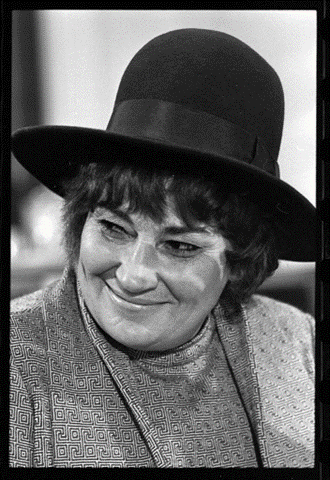
This political power, however, was largely disorganized for many years until the beginning of the third wave, where they tried to reorganize to begin making waves again. The goal of the E.R.A. was largely to get rid of the piece-by-piece strategy of previous women’s movements, taking it one step at a time to get the rights they deserved, but with the failure of the E.R.A. in 1982. Many women were lost on how to move forward, but with the third wave, many of its supporters and organizers realized that if the E.R.A. wouldn’t pass, then they would return to the technique used by their predecessors to not only get political representation but to force politicians and the general public to see the power the movement still held, even if it wasn’t being acknowledged. Soon, women began to organize, not just by running candidates for office, but by seeking political action, both on the state and federal level, following the piece-by-piece approach. Just as women were running candidates for office in the wake of the Anita Hill trial, many groups of women, including a group led by Bella Abzug, began petitioning for more women to be nominated in all open seats in government.16 The peak of this influence occurred when women did begin to take on political power at the later end of the 3rd wave when it was time to begin nominating a new sitting justice on the Supreme Court, and unlike what occurred last time with Anita Hill, women now having a glimpse of power and a hope for equality made sure their voices were heard. Unlike during the previous nomination, a woman named Senator Feinstein was on the judicial committee for confirmation, and she was making sure that everyone understood the distrust and dislike women had for him based on his previous comments about women and his stance on abortion.17 She discussed her opinion on Roberts as a judge during her fiery speech, where she condemned him for his comments and even made the point clear that she was the only woman in the room, but unlike before, she was going to make sure her voice was heard.
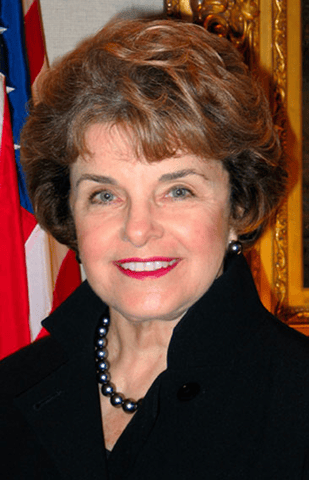
Even though John Roberts would end up being confirmed as the Chief Justice of the Supreme Court, the ability to have a woman on that committee talking about issues that affected them wasn’t something possible before that was a desire with the 2nd wave and the passing of the E.R.A, but with political reform and political representation, women could finally have a voice after many decades of hard work. The most important part of this case that is not acknowledged is that this fiery speech and the reorganization of the movement did not just inspire further political action, but it led to changes in media, political party organization, and even changes to the news. Inspired by Feinstein’s speech and also recent controversies by men and women across America, Ellen Goodman, a well-known Pulitzer Prize winner, even wrote an opinion piece where she aired out some of the most well-known and horrifying acts of sexism and gender violence that occurred that year even pointing out specific politicians and celebrities.18 Feminist magazines, newspapers, and newsletters have existed for an exceptionally long time, but for the first time with growing political power and activism, these opinion pieces were not just coming from known feminists and activists but rather from regular people who finally felt like they had the power to speak. The failure of the E.R.A. was catastrophic because it forced the movement to reorganize itself, but once the third wave began to take off. The political power and representation that it gave women allowed them to have a voice that they had seen before.

The third wave of feminism, while not acknowledged as much as its predecessors, set up a new era for the women’s movement that focused on breaking down the boundaries between the people and their representation. Representation that fully encompassed the actual population of the United States, which was not just white wealthy males. It varied in its main goals from cultural to political, but at the end of the day, it began to accomplish feats that had previously been considered doomed after the fall of the E.R.A. While the passing of the E.R.A. would have enacted full equality through the Constitution, the movement did not collapse after failure but rather reorganized itself inspired by the women of the past and infuriated by the mistreatment of the present to create a whole new movement that focused on making themselves heard and respected. While there were many cultural reasons behind the reorganization and revitalization of the 3rd wave, the truth is that the women of the 3rd wave were deeply inspired by the women who came before them who worked so hard just to have the E.R.A. taken from them when they were so close, so even though the movement may have been close to death, the next generation brought it back to make the statement that no matter how much failure they will go through as a movement, they will continue on to honor the work of those before them who fought so hard to get where they are today as Hillary Clinton even said in her famous speech on Women’s Day.19 So, while the 3rd wave may be considered over by historians, the E.R.A. will continue to inspire future waves, as long as women are still not considered constitutionally equal in the United States.
Featured Playlist: The History of the Women’s Movement Through Music (1970s – 2010)
Featured Image:
Patterson, Laura. Senator Barbara Mikulski standing with women senatorial candidates left to right Carol Moseley-Braun, Barbara Boxer, Senator Patty Murray and others at Democratic National Convention, Madison Square Garden, New York City. [Photograph]. Library of Congress. July 1992. https://www.loc.gov/item/2015645169/.
Footnotes:
- “WOMEN SEE COOLIDGE on ‘BLANKET EQUALITY’; Union Workers Ask Him to Oppose National Woman’s Party’s Proposed Amendment.” New York Times, December 13, 1923. https://timesmachine.nytimes.com/timesmachine/1923/12/13/104974218.html?pageNumber=3. ↩︎
- N.O.W. “Equal Rights Amendment – Declaration of State of Emergency.” Feminist Majority Foundation. Accessed November 30, 2023. https://feminist.org/resources/feminist-chronicles/part-iii-the-early-documents/equal-rights-amendment-declaration-of-state-of-emergency/. ↩︎
- Dumenil, Lynn. “The New Woman and the Politics of the 1920S.” OAH Magazine of History 21, no. 3 (2007): 22–26. http://www.jstor.org/stable/25162125. ↩︎
- N.O.W. “National Organization for Women Statement of Purpose – Feminist Majority Foundation.” Feminist Majority Foundation. Accessed November 30, 2023. https://feminist.org/resources/feminist-chronicles/part-iii-the-early-documents/national-organization-for-women-statement-of-purpose/. ↩︎
- Hewitt, A. Nancy. No Permanent Waves: Recasting Histories of U.S. Feminism. Piscataway: Rutgers University Press, 2010. Accessed November 30, 2023. ProQuest Ebook Central. ↩︎
- Walker, Rebecca. “Becoming the Third Wave.” Ms. Magazine, January 1992, 39-41. ↩︎
- Lear, Martha. “WOMEN: April 11, 1976; Who’s Afraid of the E.R.A.?” New York Times, April 14, 1996. https://timesmachine.nytimes.com/timesmachine/1996/04/14/072044.html. ↩︎
- Zarnow, R. Leandra. Battling Bella: The Protest Politics of Bella Abzug. Cambridge, Massachusetts; London, England: Harvard University Press, 2019. ↩︎
- Michael X. Delli Carpini, and Ester R. Fuchs. “The Year of the Woman? Candidates, Voters, and the 1992 Elections.” Political Science Quarterly 108, no. 1 (1993): 29–36. https://doi.org/10.2307/2152484. ↩︎
- Associated Press. “Thomas Accused of Sexual Harassment.” Aiken Standard, October 7, 1991. https://access-newspaperarchive-com.eu1.proxy.openathens.net/us/south-carolina/aiken/aiken-standard/1991/10-07/page-3/. ↩︎
- Associated Press. “Thomas Allegations Increase Activism.” Aiken Standard, October 10, 1991. https://access-newspaperarchive-com.eu1.proxy.openathens.net/us/south-carolina/aiken/aiken-standard/1991/10-10/page-2/. ↩︎
- Law, Donald. “Women Libbers Find Fresh Fodder in Battle of Sexes.” Aiken Standard, October 14, 1991. https://access-newspaperarchive-com.eu1.proxy.openathens.net/us/south-carolina/aiken/aiken-standard/1991/10-14/page-35/.; Kilpatrick, James. “Now Bella Understands How Gen. Custer Felt.” Florence Morning News, July 8, 1977. https://access-newspaperarchive-com.eu1.proxy.openathens.net/us/south-carolina/florence/florence-morning-news/1977/07-08/page-4/. ↩︎
- Grady, Sandy. “Bush Proves He’s Master at Hardball.” Aiken Standard, October 28, 1991. https://access-newspaperarchive-com.eu1.proxy.openathens.net/us/south-carolina/aiken/aiken-standard/1991/10-28/page-17/. ↩︎
- Senate Historical Office. “U.S. Senate: ‘Year of the Woman.’” United States Senate. Accessed November 30, 2023. https://www.senate.gov/artandhistory/history/minute/year_of_the_woman.htm. ↩︎
- “‘Flirting with Trouble.’” Aiken Standard, July 14, 1983. https://access-newspaperarchive-com.eu1.proxy.openathens.net/us/south-carolina/aiken/aiken-standard/1983/07-14/page-4/. ↩︎
- Sontag, Deborah. “Anita Hill and Revitalizing Feminism.” New York Times, April 26, 1992. https://www.nytimes.com/1992/04/26/nyregion/anita-hill-and-revitalizing-feminism.html?searchResultPosition=54. ↩︎
- “Senate Panel’s Debate on the Confirmation of Judge Roberts.” New York Times, September 22, 2005. https://www.nytimes.com/2005/09/22/politics/politicsspecial1/senate-panels-debate-on-the-confirmation-of-judge.html?searchResultPosition=46. ↩︎
- Goodman, Ellen. “Opinion | Meanwhile: Some People Are Just Better at Sexism than Others.” New York Times, August 26, 2005. https://www.nytimes.com/2005/08/26/opinion/meanwhile-some-people-are-just-better-at-sexism-than-others.html?searchResultPosition=49. ↩︎
- Clinton, Hillary Rodham. “Read Hillary Rodham Clinton’s ‘Women’s Rights’ Speech from 1995.” Atlantic, September 1, 2020. https://www.theatlantic.com/politics/archive/2020/09/read-hillary-rodham-clintons-womens-rights-speech/615733/. ↩︎
How To Cite:
Emma Grace Chambers, “Failure Can Lead to Success: How the Failure of the E.R.A. inspired Women of the Next Generation to Fight Back.” Digital History at USCA, 2023, https://digitalhistoryusca.com/2023/12/04/failure-can-lead-to-success-how-the-failure-of-the-e-r-a-inspired-women-of-the-next-generation-to-fight-back/.
Further Readings and Resources:
Alexander, L. Kerri. “Feminism: The Third Wave.” National Women’s History Museum. June 23, 2020. https://www.womenshistory.org/exhibits/feminism-third-wave.
“Equal Rights Amendment.” Smithsonian. n.d. https://www.si.edu/spotlight/era.
III Codrington, U. Wilfred and Cohen, Alex. “The Equal Rights Amendment Explained.” Brennan Center. January 23, 2020. https://www.brennancenter.org/our-work/research-reports/equal-rights-amendment-explained.


Hi Emma,
I enjoyed reading your blog. Your explanation of how each wave of the feminist movement influenced the next was interesting. Your article on a very complicated and hard-fought issue was so well-researched. I thought it would become an Amendment after it finally passed in the 38 states and went to Congress. I don’t know how many more waves it is going to take for passage now that the abortion issue is back on the table. Great read!
LikeLiked by 1 person
Hey Emma,
I found your article to be very fascinating to me, as I did not know much about this movement or even the ERA. I recently taught a lesson on the beginning on the Women’s Rights Movement, and that was really my first time ever learning about. Seeing the resilience that they had and the courage to keep trying to achieve their goals is inspiring to read about. I also find it really interesting to see that they were willing to keep trying even after failure, because that is something that we can all learn from.
LikeLiked by 1 person
Hi Emma, this is a great article! The level of detail and explanation in your article is incredible! I think this topic is so important, as women today are still fighting for control over their bodies. What’s really amazing is the persistence of those fighting for equal rights, because the opposition is brutal and cares very little about not only their opinion, but these individuals as people. I’m sure many must want to give up every single day, but they still move forward!
LikeLike