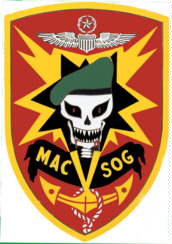
There are times when entertainment surpasses reality in the context of film, reading, and other forms of entertainment. There are times when reality is covered up in the name of trying to sell movie tickets, books, or whatever medium of entertainment producers are using. There is a group of people though, whose real-life experiences far exceed anything to ever be shown in theatres. The MACVSOG or “Military Assistance Command, Vietnam Studies and Observations Group” or just “SOG” units as they are generally referred to, were first formed in 1964 [1]. The men who served in these units saw and did things that quite frankly, are not believable or possible. They are not alone. They are joined by men and women who took part in similar operations around the world in places such as Cuba, Iran, and Guatemala among many more. What this article will seek to explore is how US covert operations in Vietnam conformed to and diverged from similar actions in the broader Cold War. SOG units were unique in that they had more resources, fewer restrictions, and far more support than the vast majority of their non-military counterparts.
Covert Operations have been around as long as one political entity has feared, distrusted, or simply disliked another political entity. Where they really began to be utilized in a modern sense, however, was in Nazi Germany and the Communist Soviet Union. The United States was quick to catch on in the early days of the Cold War. According to David Isenberg’s 1989 analysis titled The Pitfalls of U.S. Covert Operations, these early stages varied in commitment, ranging from the “Provision of political advice and counsel to leaders” all the way to “paramilitary operations that attempt to topple regimes.”[2] In fact, one of the most notable of these early types of foreign action carried out by American intelligence agencies was in the 1953 “TPBEDAMN” operation[3]. This anti-Soviet operation was one of the first of its kind and set a dangerous precedent for the future of American involvement in other countries. Despite an abundance of pressure from European allies, and little evidence of Soviet interest in Vietnam, this pattern persisted into Vietnam at the urging of voices of those such as Secretary of Defense Robert Mcnamara. These types of concepts obviously are more suited for discussion as to how the United States initially got involved in Vietnam rather than the tactics and actions used by SOG members, but they do illustrate the acknowledgment that these groups were needed. While conventional methods were thought to be sufficient for the fighting in South Vietnam, it was known that covert, more classified forms of combat would be needed to interfere with the Ho Chi Minh Trail that was a vital supply line that cut through Laos and Cambodia. The map below shows how there was a need for covert and secretive units who had the ability to access places conventional forces could not.
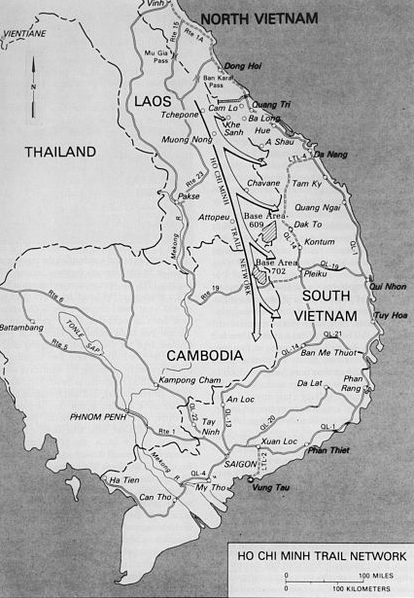
http://ehistory.osu.edu/osu/books/end/
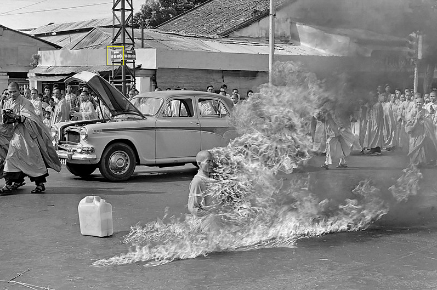
In comparison to other similar operations of the time, the actions in Vietnam were demonstrably more visible than those in other parts of the world. Due to failures by the CIA in other covert operations, there was an understandable reluctance to overtly intervene in another nation as openly after the Bay of Pigs disaster. To reference Isenberg once more, that operation severely limited what the United Stats was able to do for the rest of the war from an Agency standpoint[4]. Secrecy and distrust were not new as it pertained to the conflict in Vietnam. Faulty assumptions and misguided loyalties along with general misunderstandings of the Vietnamese themselves were all key in the United States eventually being involved in all-out war. According to Elizabeth Becker and the New York Times[5], the United States had all but made the decision to help France regain its colony in Indochina as far back as the Roosevelt Administration. This line of thinking persisted into the Truman, Eisenhower, Kennedy, and Johnson Administrations as well. It was not until Kennedy presidency, however, that the United States became too deeply involved in Vietnam to withdraw. Under Kennedy, with violence steadily increasing in Vietnam and American commitment to the conflict increasing as well, Malcolm Browne, an Associated Press correspondent, took an infamous photograph that was a dark indicator of what was going on in Vietnam[6]. This infamous photo of a Buddhist monk burning himself alive in protest of Ngo Dinh Diem, the American-backed head of government in South Vietnam, sent ripples through the American public and government alike. This was generally considered to be the moment when the decision was made to allow Diem to be overthrow, which in turn drastically increased Saigon’s dependence on American aid[7].
Within a year of this infamous moment in the conflict, Diem had been overthrown, and President Kennedy had been assassinated. It is generally accepted that Lyndon Johnson was far more aggressive in Vietnam than either of his predecessors. This, combined with the coup which ended in Diem’s death, lead to much more involvement on part of the Americans. Diem had been hand-picked by the United States in the form of Secretary of State John Dulles[8]. The relative compliance of the United States in his overthrow and assassination meant that the United States effectively had two options. One option which was never really an option, was to abandon South Vietnam to fight the Communist North alone, the other was to send combat troops to Vietnam for the first time. Obviously, the Johnson administration opted for second. Early battlefield tactics proved costly against the Viet Cong and NVA (North Vietnamese Army) regulars, and more aggressive tactics became necessary. One of these more aggressive tactics was the formation of SOG. SOG units were specifically put together to “to execute an intensified program of harassment, diversion, political pressure, capture of prisoners, physical destruction, acquisition of intelligence, generation of propaganda, and diversion of resources, against the Democratic Republic of Vietnam”[9]. These ideas undoubtedly sounded excellent to the higher-ups, but what they entailed are some of the most daring, incredible, generally insane, and some nearly suicidal missions in United States military history. The general operating methods of these units was to be inserted by helicopter, deep within Cambodia or Laos, with little or no support, and attempting to disrupt the supply lines that were known as the Ho Chi Minh trail that kept a steady supply of weapons flowing to the Viet Cong. Unlike many conventional units of the time, these SOG teams made strong connections with the local populace in efforts to blend in and understand the local communities. Montagnards (French term for Mountain People) were one of the largest minorities in Vietnam[10]. Montagnards were natives of the infamous jungle environments that the war was mainly fought in, and SOG members routinely earned their assistance by trading some type of good or service, such as a pipe for a well, as mentioned in the third chapter of John L. Plaster’s book Sog: The Secret Wars of America’s Commandos in Vietnam.
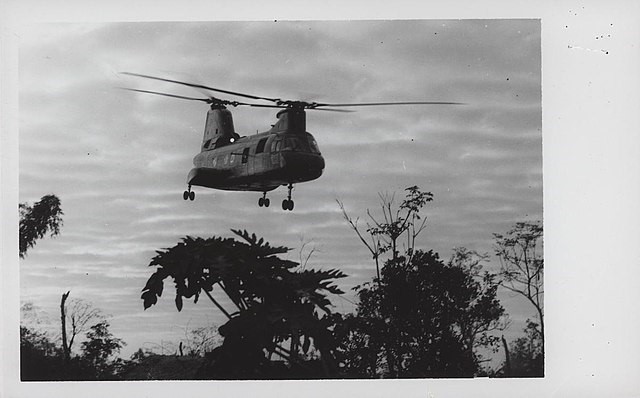
From the Jonathan F. Abel Collection (COLL/3611) at the Archives Branch, Marine Corps History Division
OFFICIAL USMC PHOTOGRAPH, December 25, 1967 https://www.flickr.com/photos/usmcarchives/29259786591/
In Plaster’s Afterword, a detailed list of SOG’s extensive accomplishments is provided. According to his writing, SOG units fighting only in Laos and Cambodia suffered a near 100% casualty rate, inflicted an estimated kill ratio of 150:1, and was the Vietnam War’s most decorated unit[11]. All particularly impressive considering almost all of their engagements had to be kept secret by both sides. Of course, their efforts were ultimately successful, and South Vietnam eventually did fall to the Communist North. When the United States began its official withdrawal, SOG members were often the last remaining Americans on base. While the war ultimately ended in defeat, it is fair to suggest that the SOG mission was largely successful in the Vietnam War. Considering many men and women who were a part of the SOG community are now dealing with health issues both related to the war and to their age, it is imperative for historians to record their stories. The nature of their missions often prevented them from speaking out in any way until many years after the war, but there are now some avenues for them to share their accounts. One of the most effective means has been via the Podcast, of which a list will be provided at the end of this article. In closing, this article’s intention is not to glorify or celebrate one of the darkest times in United States history, but to shed some light on a group of American’s that faced remarkable odds and were able to represent the country and its people with truly incredible resolve and accomplishments.
Featured Image: The Unofficial emblem of MACVSOG, Author Unnamed, http://aircommandoman.tripod.com/sitebuildercontent/sitebuilderpictures/sogpat~1.jpg
[1][1] Staheli, p. 3 Staheli, Daniel J. Analysis of Military Assistance Command, Vietnam Studies and Observation Group, apps.dtic.mil/sti/trecms/pdf/AD1177859.pdf. Accessed 4 Dec. 2023.
[2] Isenberg, David. “The Pitfalls U.S. Covert Operations. Cato Institute, 1989
[3] Gasiorowski, Mark J. “The CIA’s TPBEDAMN Operation and the 1953 Coup in Iran.” Journal of Cold War Studies, 15, no.4 (2013):p4-5
[4] Isenberg, David. “The Pitfalls of U.S. Covert Operations.” Cato Institute p. 7
[5] Becker, Elizabeth. 2021. The Secrets and Lies of the Vietnam War, Exposed in One Epic Document. The New York Times
[6] Kinzer, Stephen. Overthrow: America’s century of regime change from Hawaii to Iraq. New York Times Books, 2006.
[7] Kinzer, Stephen. Overthrow: America’s century of regime change from Hawaii to Iraq. New York Times Books, 2006.
[8] Kinzer, Stephen. Overthrow: America’s century of regime change from Hawaii to Iraq. New York Times Books, 2006.
[9] Staheli, Daniel J. Analysis of Military Assistance Command, Vietnam Studies and Observation Group, apps.dtic.mil/sti/trecms/pdf/AD1177859.pdf. Accessed 4 Dec. 2023.
[10] Plaster, John L. Sog: The Secret Wars of America’s Commandos in Vietnam. New York: Simon & Schuster, 1997.
[11] Plaster, John L. Sog: The Secret Wars of America’s Commandos in Vietnam. New York: Simon & Schuster, 1997.
How to cite this article:
John Yonce, “SOG and Other Covert Operations of the Cold War,” Digital History at USC Aiken, 2023,