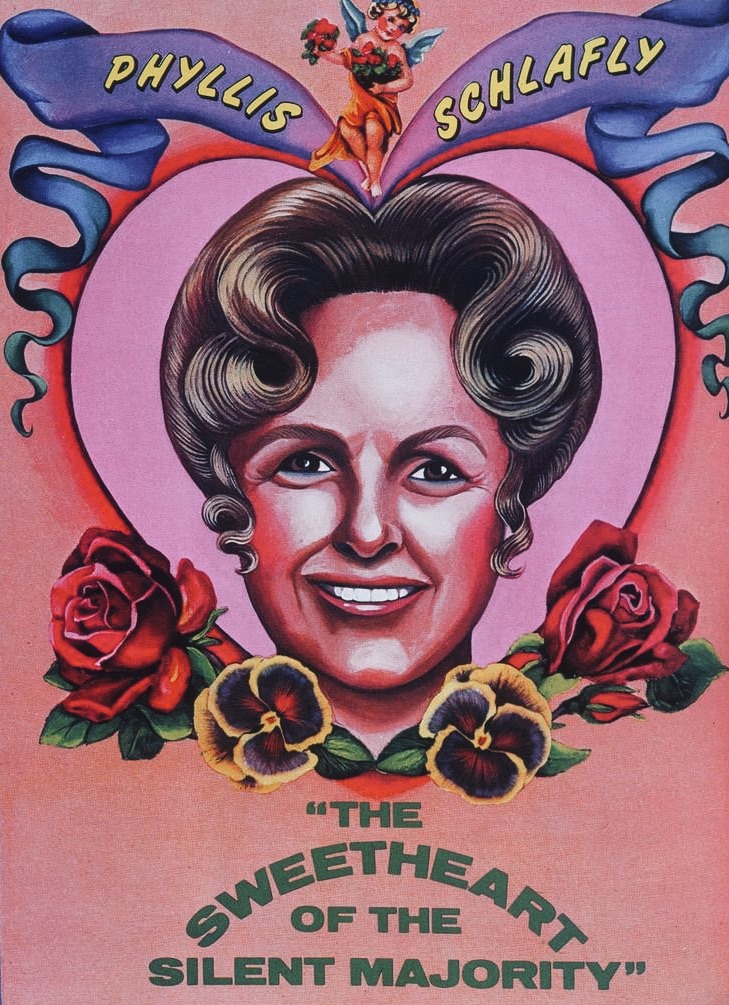
On April 27, 2023, the Reuters headline read, “U.S. Equal Rights Amendment Blocked Again, a Century after Introduction.”[i] The debate surrounding the Equal Rights Amendment (ERA) in the 1970s was a battleground of ideologies. Phyllis Schlafly stood at the forefront of the opposition—a formidable and controversial figure who passionately fought against the proposed constitutional amendment. This exploration aims to dissect Phyllis Schlafly’s role in halting the ERA movement. Was she a political pawn, strategically placed to counter the feminist movement, or a skillful activist who masterfully mobilized conservative forces to safeguard traditional values and further her political career? This inquiry analyzes Schlafly’s involvement and political strategy within the broader socio-political landscape in the quest for gender equality.
Historical Background
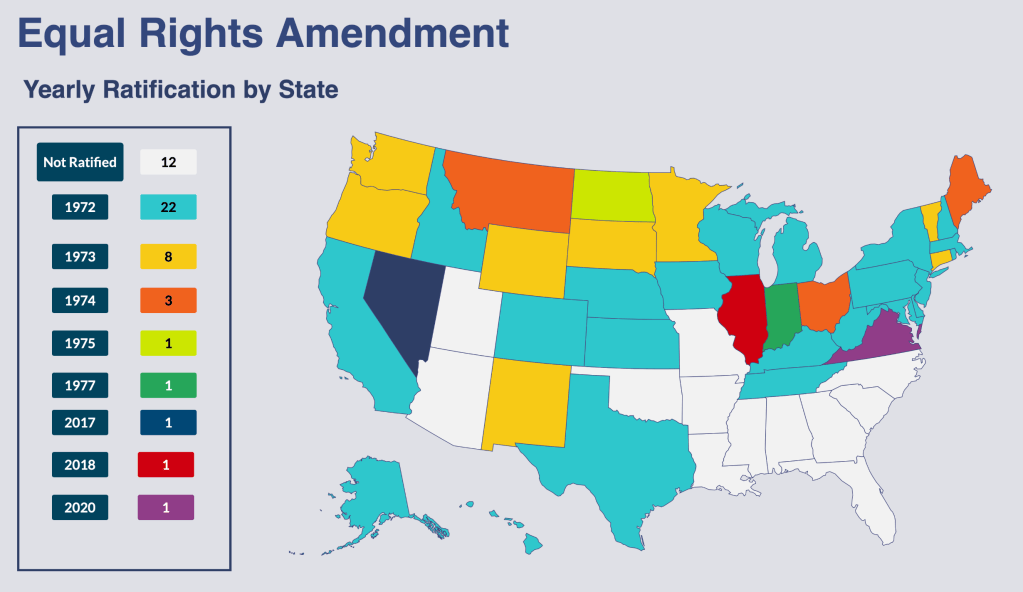
The Equal Rights Amendment (ERA) was a proposed amendment to the United States Constitution that prohibited discrimination based on sex. Ruth Bader Ginsburg posits in her treatise The Need for the Equal Rights Amendment that “The Notion that men and women stand as equals before the law was not the original understanding, nor was it the understanding of the Congress that framed the Civil War amendments.”[ii] In 1972, Congress passed it and sent it to the states for ratification, with an appendix that set a deadline of seven years (March 1979) for ratification. Under U.S. law, amendments to the Constitution must be ratified by three-fourths, or 38 of the 50 state legislatures, and do not require presidential approval. Throughout the 1970s, the amendment would garner support and reach a thirty-five-state ratification by 1977. However, its passage failed, never attaining the number of states necessary to ratify the amendment, largely due to the diligence of Phyllis Schlafly and her organized Stop ERA (Stop Taking Our Privileges) campaign.
Political Background
Phyllis Schlafly was no stranger to politics before her Stop ERA campaign. She ran as a Republican nominee for the U.S. House of Representatives in 1952 and again in 1970 in Illinois’ 24th congressional district. Despite her efforts, she was unsuccessful in both bids. She authored A Choice Not an Echo in 1964, bringing her national attention. The book sold over three million copies and helped promote Senator Barry Goldwater’s presidential campaign. According to Phyllis Schlafly Eagles’ article, The Life and Legacy of Phyllis Schlafly, “She served as an elected delegate to nine Republican National Conventions” and as an “alternate delegate in four other Republican National Conventions.” For fifteen years, she Chaired the National Defense with the National Society, Daughters of the American Revolution. Schlafly also ran for president of the National Federation of Republican Women in 1967 and lost.
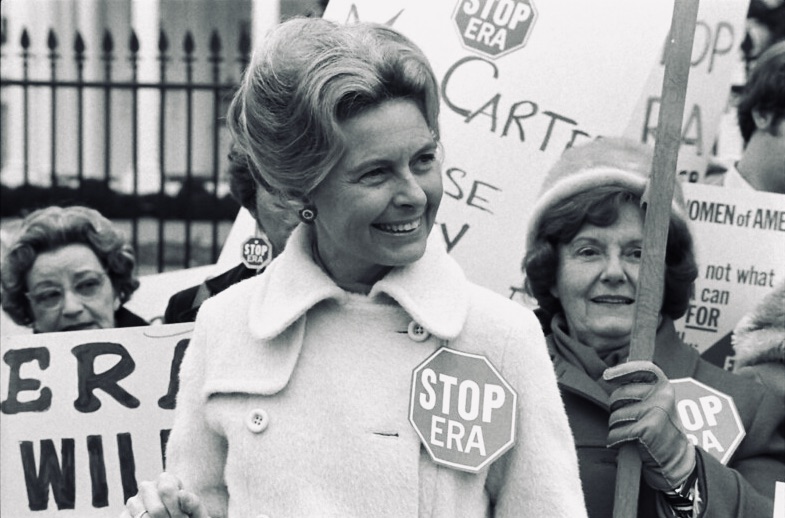
Attempting to keep her supporters informed about political issues and fostering her public image, she accepted an invitation by Senator Sam Ervin from North Carolina to head up the opposition to the Equal Rights Amendment. Although admitting that “she knew little about the ERA at the time it was passed.”[iii] She began her campaign by broadcasting “Ervin’s objections to the amendment” and publishing her first anti-ERA sentiments in February 1972 in her monthly newsletter, The Phyllis Schlafly Report .[iv] She also provided Ervin with “conservative mailing lists so that he could send out thousands of reprints of his Senate speeches “to his constituents.”[v] Her Stop ERA campaign was multifaceted, and she was adept at mobilizing conservative women to become politically active using existing networks of traditional women.
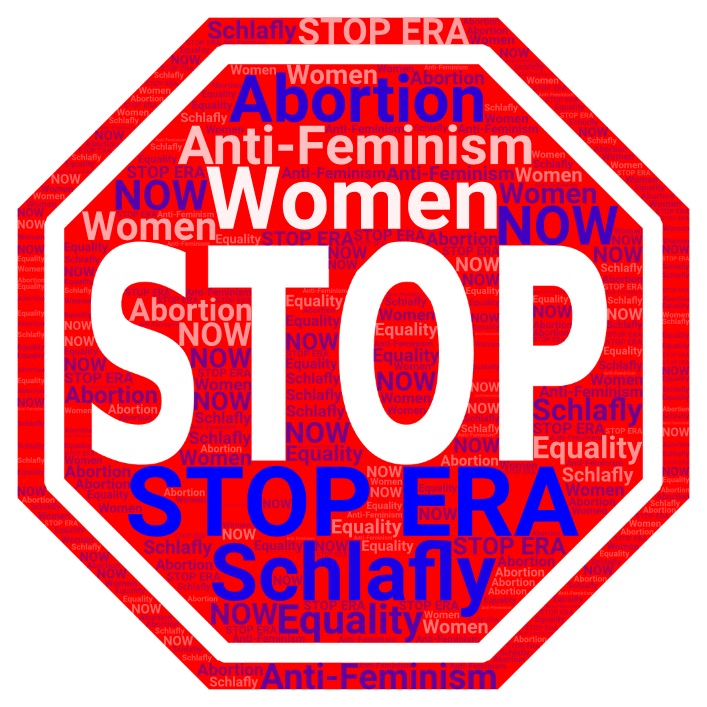
She also exploited religious groups to build a widespread coalition. Schlafly used media platforms to disseminate her message and tapped into conventional political networks to gain political support and influence. In addition to the Phyllis Schlafly Report, she wrote articles for the National Review, Human Events, and Policy Review. The press regularly interviewed her, and her syndicated column appeared in over 100 newspapers. She appeared on many nationally broadcast television and radio talk shows, engaging in lectures at over five hundred college and university campuses. She actively lobbied to sway lawmakers at both the state and federal levels. By skillfully framing the debate around the ERA, she appealed to a broader audience and garnered support for her cause and her political aspirations.
Tenets of Opposition
Schlafly argued that the ERA posed a threat to the traditional gender roles that she believed were crucial for maintaining stable families in society. She thought the amendment would lead to the erosion of distinct roles for men and women, destabilizing the family. She expressed concerns that the ERA would eliminate legal distinctions between men and women, resulting in women losing privileges, such as exemptions from the military draft and specific labor protections. Schlafly also maintained that the ERA could have broader societal consequences, affecting policies related to alimony, child custody, and the treatment of mothers in the workforce, including government funding for abortions. Schlafly warned that unintended consequences could arise from the ERA, suggesting that the amendment could be interpreted and applied in ways that would adversely affect women’s lives. She averred in a New York Times article that the “passage of the E.R.A. would result in the legalization of homosexual marriages, coed bathrooms, and coed everything—whether you like it or not.”[vi].
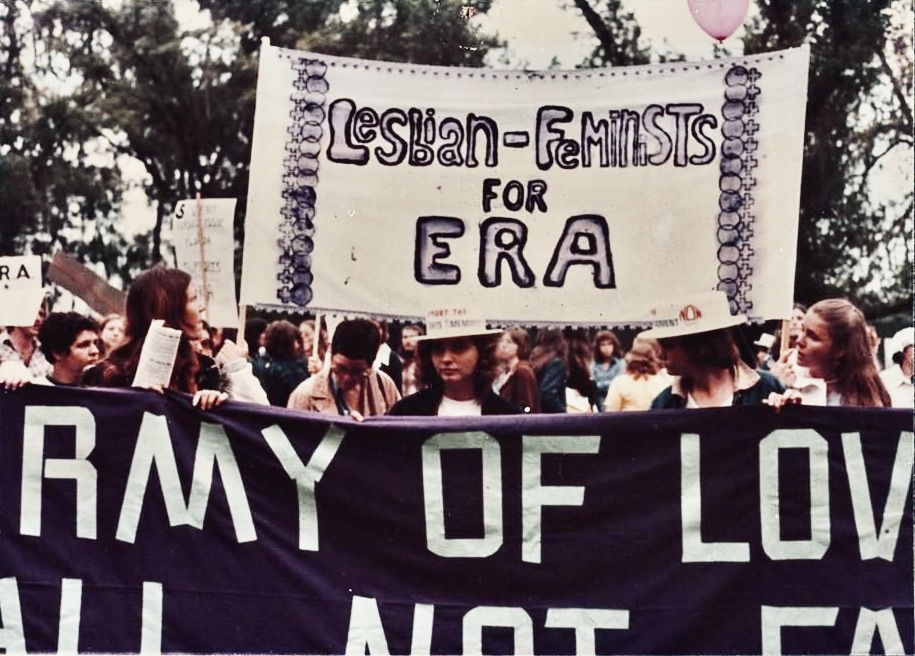
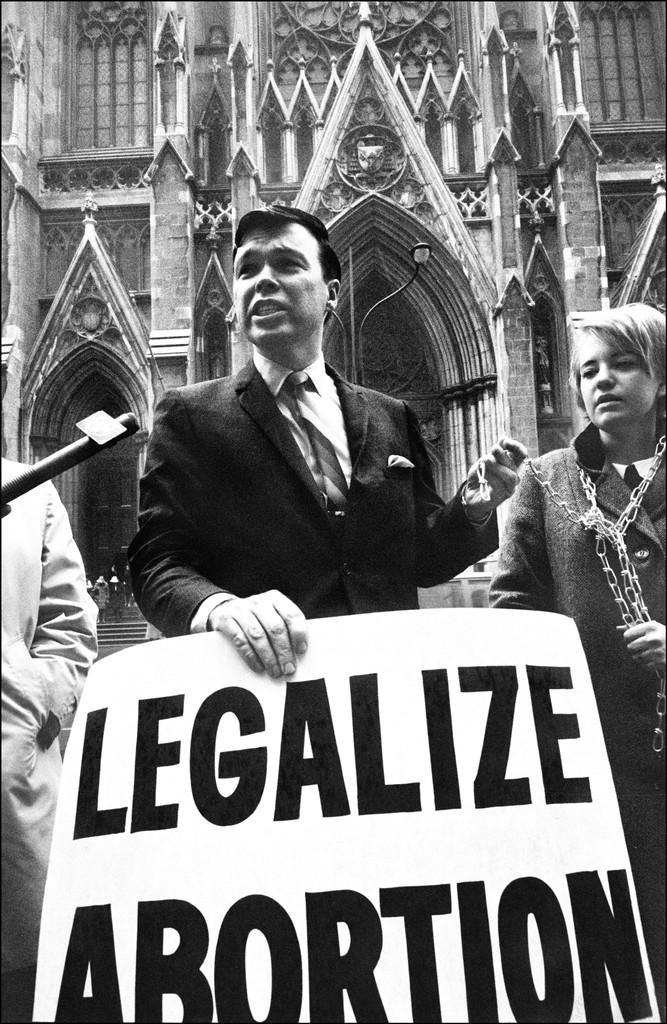
Schlafly’s anti-ERA campaign flourished. She tapped into a groundswell of discontent among homemakers who felt their life choices were devalued, and she resonated with religious conservatives uneasy about alterations to traditional family structures. A significant portion of Schlafly’s followers also shared a common motivation rooted in the decision by the Supreme Court in 1973 on Roe v. Wade, which legalized abortion. She would use her anti-abortion stance effectively to garner support for her Stop ERA campaign.
Political Aspirations
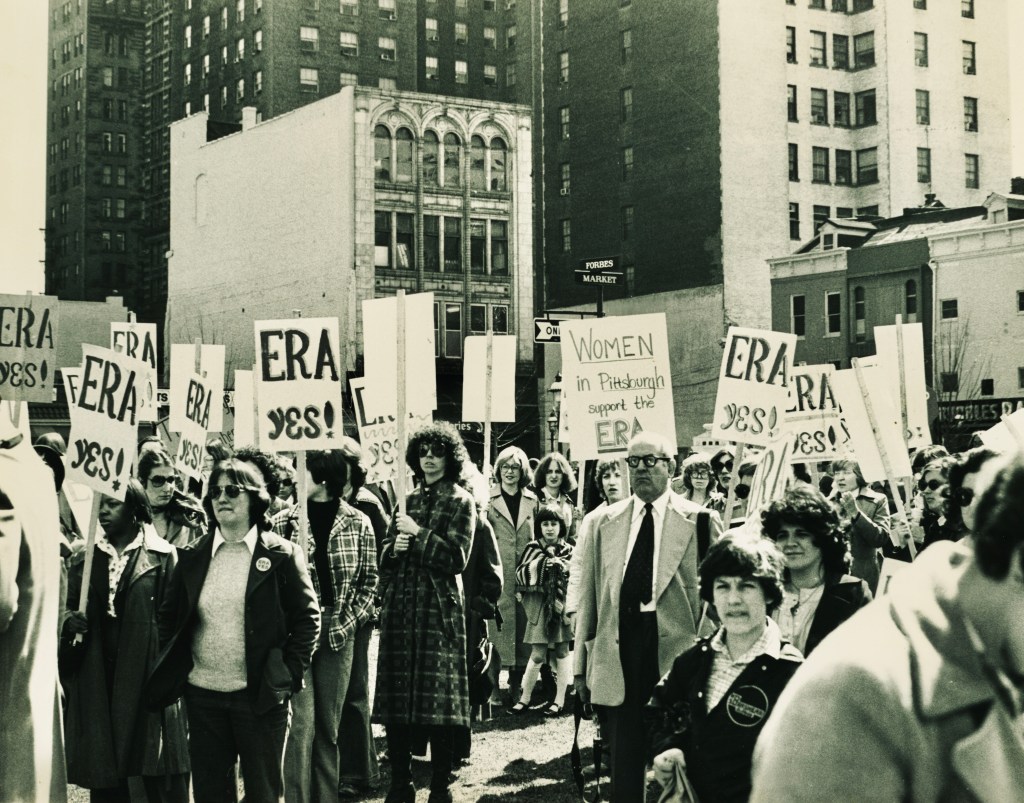
By 1979, the ratified states still stood at 35. With the seven-year deadline looming for enactment by 38 states, feminists fought for an extension to the amendment’s deadline. At this point, Schlafly had amassed a following of over 20,000 members through her Eagle Forum and Stop ERA campaign. She and her followers fought against the extension, avowing in an interview in Time Magazine that “We will bury ERA in March 1979.” As the resolution for extension approached, most of Congress still supported the amendment. However, the “resolution fell sharply from the one-sided approval of the ERA itself six years earlier.”[vii] The House vote fell from 94 percent to 55 percent,” and the “Senate vote declined from 91 percent to 63 percent.” The effectiveness of Schlafly’s campaign was evident.
Her dedicated followers armed her with political sway, which she used effectively to further the cause and her career. According to an interview by the New York Times on the Republican Women’s Task Force supporting Ronald Regan in 1976, she quipped, “After the convention, we’ll be able to cut some deals with the President.” She used the media effectively. She appeared on the Phil Donahue Show, Firing Line, and Good Morning America, debating staunch ERA supporter Betty Friedan.
https://www.youtube.com/watch?v=EtcSFH1xubA
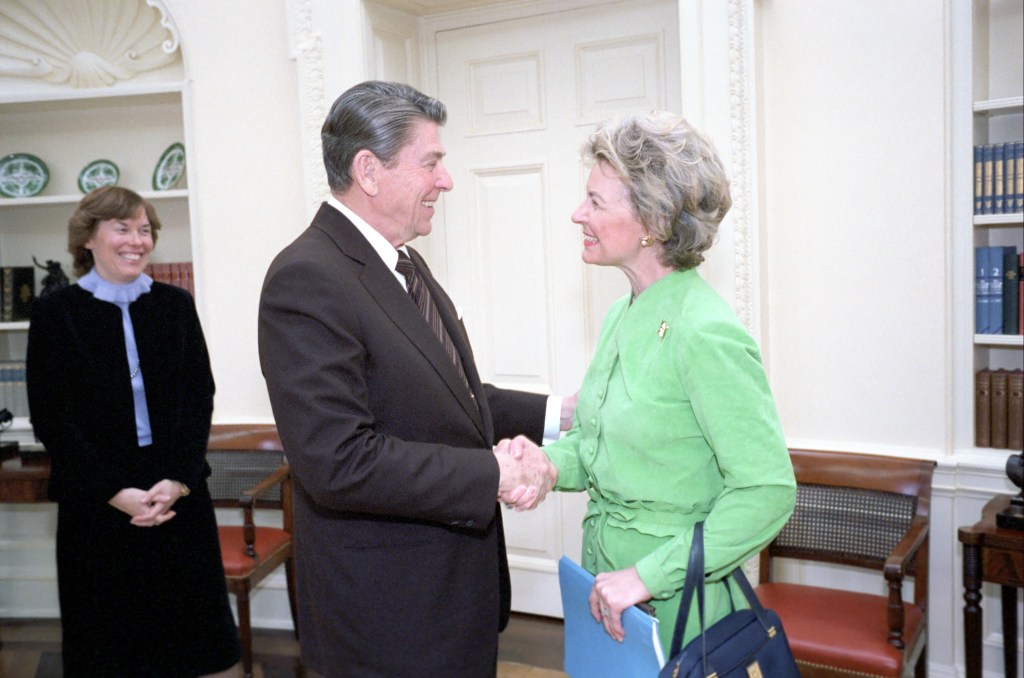
The success of the Stop ERA campaign bolstered Schlafly’s political aspirations. In 1980, she agreed to endorse Ronald Regan for President, believing she would receive a role within his administration. Schlafly wanted a Cabinet post, eyeing the position of Secretary of Education or Under Study in the Defense Department. She orchestrated a letter campaign advocating for her consideration in these roles. Her close friend, Joseph Coors, sent a letter to the Reagan-Bush transition team on election day in 1980, urging the incoming administration to give Schlafly a prominent position. She further lobbied and attained endorsements from influential individuals who supported her bid to be appointed Secretary of Education or Under Study for the Secretary of Defense. Despite her efforts and the backing of influential allies, Schlafly’s endeavors to secure a prominent role in the Reagan administration proved unsuccessful. Redirecting her ambitions, a few months later, she lost an attempt for a position on the Supreme Court in June 1981. In 1985, Schlafly mounted one last effort for a political appointment at the beginning of Reagan’s second term. Calling on Coors again, he sent a letter backing Schlafly, suggesting she be appointed chair of the Bicentennial Commission. She eventually became a member (not chair) of the Commission in 1985.
The Importance of Understanding Phyllis Schlafly’s Influence on the Growth of the Republican Party and Her Role as a Political Pawn
Phyllis Schlafly’s opposition to the Equal Rights Amendment (ERA) profoundly affected the feminist movement. Schlafly’s mobilization of conservative and religious groups contributed to the increasing influence of the conservative right. Her advocacy for the pro-life movement also contributed to the growth of the Republican Party in the 1980s and 1990s. The party’s rise was closely linked to the growing polarization of partisan politics over the issue of abortion. Her efforts helped to solidify opposition to specific feminist goals, influencing the political landscape and contributing to a broader conservative resurgence in the late 20th century.
The correlation between the party’s transformation into a more successful political entity and Schlafly’s contributions is a topic that demands contemplation. Despite her opposition to the Equal Rights Amendment, Phyllis Schlafly was an innovative woman throughout her political career. It is undeniable that her potential to attain one of the numerous political positions she sought would have been realized had she supported the amendment’s passage. This paradoxical situation highlights the complexity of Schlafly’s role as a political figure and underscores the significance of her contributions to the political landscape. By examining Schlafly’s life and career, we can gain a deeper understanding of the challenges faced by women in politics.
Further Reading
- Equal Rights Amendment, https://www.archives.gov/women/era#:~:text=Three%20years% 20after%20the%20ratification,%2C%20employment%2C%20and%20other%20matter
- Phyllis Schlafly (https://www.womenshistory.org/education-resources/biographies/phyllis-schlafly.
- https://www.theguardian.com/film/2016/sep/07/equal-means-equal-film-womens-rights-us-constitution
- https://education.blogs.archives.gov/2013/12/05/the-equal-rights-amendment/.
- https://www.whitehousehistory.org/search?q=phyllis+schlafly/
Featured Photo
People. Phyllis Schlafly: “Sweetheart of the Silent Majority.” n.d. https://jstor.org/stable/community.13883741.
How to Cite This Article:
Mary Lentz “Exploring the Role of Phyllis Schlafly in Halting the ERA Movement: A Political Pawn,” Digital History at USC Aiken 2023, https://digitalhistoryusca.com/2023/12/06/exploring-the-role-of-phyllis-schlafly-in-halting-the-era-movement-a-political-pawn/.
[i]Katharine Jackson, “US Equal Rights Amendment Blocked Again, a Century after Introduction,” Reuters, April 23, 2023, https://www.reuters.com/legal/government/us-equal-rights-amendment-blocked-again-century-after-introduction-2023-04-27/.
[ii] Ruth Bader Ginsburg, “The Need for the Equal Rights Amendment,” American Bar Association Journal 59, no. 9 (1973): 1013–19. http://www.jstor.org/stable/25726416.
[iii] David E. Kyvig, “Historical Misunderstandings and the Defeat of the Equal Rights Amendment,” The Public Historian18, no. 1 (1996): 51, https://doi.org/10.2307/3377881.
[iv] David E. Kyvig, Ibid. 51.
[v] David E. Kyvig, Ibid. 51.
[vi] Judy Klemesrud, “Opponent of E.R.A. Confident of Its Defeat,” The New York Times, December 15, 1972. An opponent of E.R.A. Confident of Its Defeat, https://www.reuters.com/legal/government/us-equal-rights-amendment-blocked-again-century-after-introduction-2023-04-27/.
[vii] David E. Kyvig, “Historical Misunderstandings and the Defeat of the Equal Rights Amendment,” The Public Historian18, no. 1 (1996): 58, https://doi.org/10.2307/3377881.


Hello Mary, I find the story of Phyllis Schlafly very intriguing because, behind the campaigns to stop the equality of the sexes, she still expected to be treated fairly and equal to other male contenders for the political positions she wanted. I liked the discussion you brought up at the beginning where you considered whether she did all of this to boost her own political status and campaign, and I do think that it may be correct because if you compare her political stances to what she actually was doing, it doesn’t seem like she cared about the failure of the E.R.A. Rather, it feels like she cared more about whether she could get power, status, and positions by being opposed to it. In a way, it is kind of ironic that the same bill she opposed and received status from is the same bill that could have helped her get a position in government. Anyways, I did really like your article and I enjoyed the fact that is sparked further thought.
LikeLiked by 1 person
I really enjoyed this read. The ERA is always something I knew a little about, but not in depth. Phyllis Schlafly is a puzzling figure that deserves a deeper dive and I think you did a great job at starting that conversation.
LikeLiked by 1 person
I think that what the ERA meant back then and now would be different, looking into that would have been an interesting add on. Overall it was quite interesting to read about, I do not know if agree that she was a political pawn.
LikeLiked by 1 person
I really enjoyed your article. I knew very little about Phyllis Schlafly before reading your article and now I would like to know more her.
LikeLiked by 1 person
This was an interesting read, and very detailed! It’s interesting to consider how she shaped the future of women’s issues, and just how much of a negative impact she’s had on women’s rights that we can still see today!
LikeLike