Abraham Lincoln was completely against slavery, he always wanted to abolish (to end slavery) it, that was his goal as president, to create an amendment and free the slaves….. actually that’s wrong. In society today we have this idea of Lincoln as an abolitionist, a man whose main goal was to free the slaves, and we can blame public schooling for that I guess. Yes, Lincoln was not pro slavery but he never had the intent, until later in his tenure as president, of freeing the slaves. We as a society need to dig deeper into Lincoln to really understand how complex his opinion and ideas on slavery for the nation were, and how as they changed, it led to winning the Civil War.
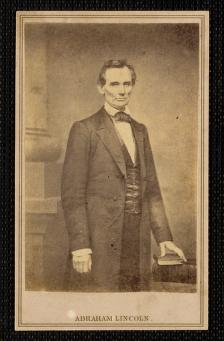
Anthony, Edward, Contributor, and Mathew B Brady. President Abraham Lincoln
. United States of America Illinois, 1860. [New York: Edward Anthony, to 1876] Photograph. https://www.loc.gov/item/2021669449/.
Lincoln had a desire to get into American politics, and in 1858 he was trying to get a seat in the United States Senate, and his imposer was the leading Democrat Stephen A. Douglas. On October 13th, 1858, during the 6th debate between the two Douglas accused Lincoln of not having any “distinction between races”. 1Lincoln, replied “I am not, nor ever have been, in favor of bringing about in any way the social and political equality of the white and black races—that I am not nor ever have been in favor of making voters or jurors of negroes, nor of qualifying them to hold office, nor to intermingling with white people; and I will say in addition to this that there is a physical difference between the white and black races which will ever forbid the two races living together on terms of social and political equality”.2 He clearly states in his reply he does not wish to change the separation or power balance between whites and blacks, nor does he plan to integrate them, to make them the same. So, he has no plans right now of wanting to do anything on the issue of slavery, and this is just two years before he is elected president. He also went on to state that “there must be the position of superior. I am as much as any other man in favor of having the superior position assigned to the white race.”3 Once more, Lincoln has identified his belief that one race must be superior, and in his mind it is favored to be the white race.
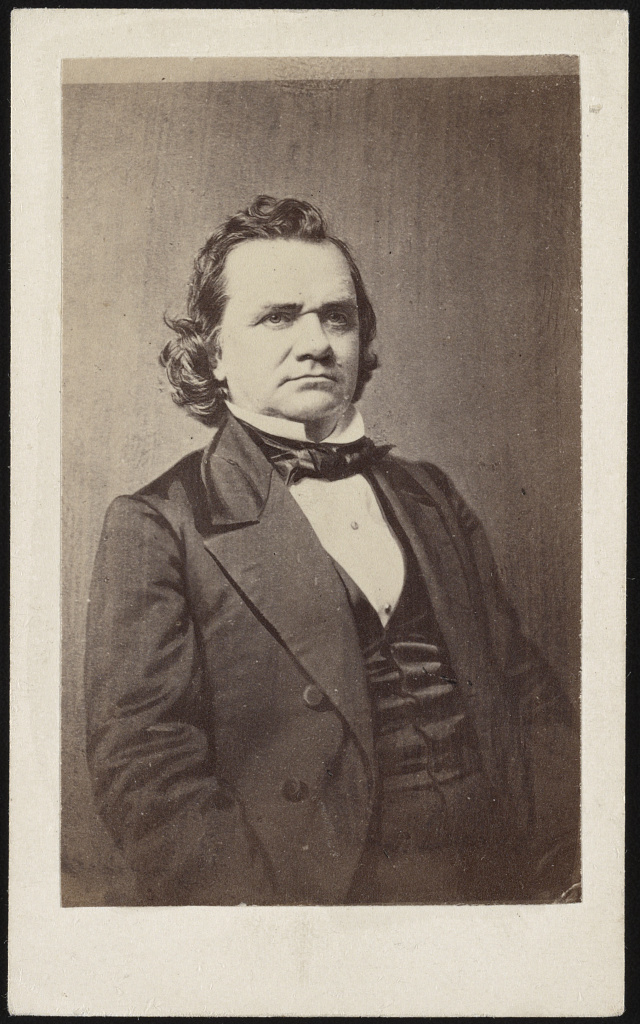
E. Anthony, photographer. Senator Stephen A. Douglas / E. Anthony, 501 Broadway, N.Y
. Illinois, ca. 1860. [New York: E. Anthony] Photograph. https://www.loc.gov/item/2017660633/.
In 1858 Lincoln lost the Senate election to Douglas, but he became somewhat of a national figure and won the presidential election in 1860. He carried all of the northern states but did not carry any of the border states, and he received no votes from the southern states. A lot of the southern states were afraid Lincoln’s election may pose itself as a problem to continued slavery.. At his inauguration in 1861, seven states had seceded from the Union and formed the Confederate States of America.4 In his inaugural speech he tried to sway white southerners back into the Union, “I declare that ‘I have no purpose, directly or indirectly, to interfere with the institution of slavery in the States where it exists. I believe I have no lawful right to do so, and I have no inclination to do so.’”5 He went on to also reference Article IV, Section II, Clause III of the US Constitution, which is the law allowing slave owners the right to repossess runaway slaves in non-slave states.6 In his speech he talks about this law to reassure slave owners that their slaves would be returned, and that he did not wish to end slavery in those states.
Now Lincoln was a republican and at this time the republican stance on slavery was they did not want to see the growth or expansion of slavery in new or expanding states as the United States moved west. And ironically it was not necessarily always a moral reason for this stance, but a political one. As we moved west slave states meant southern power, non-slave states meant northern power.
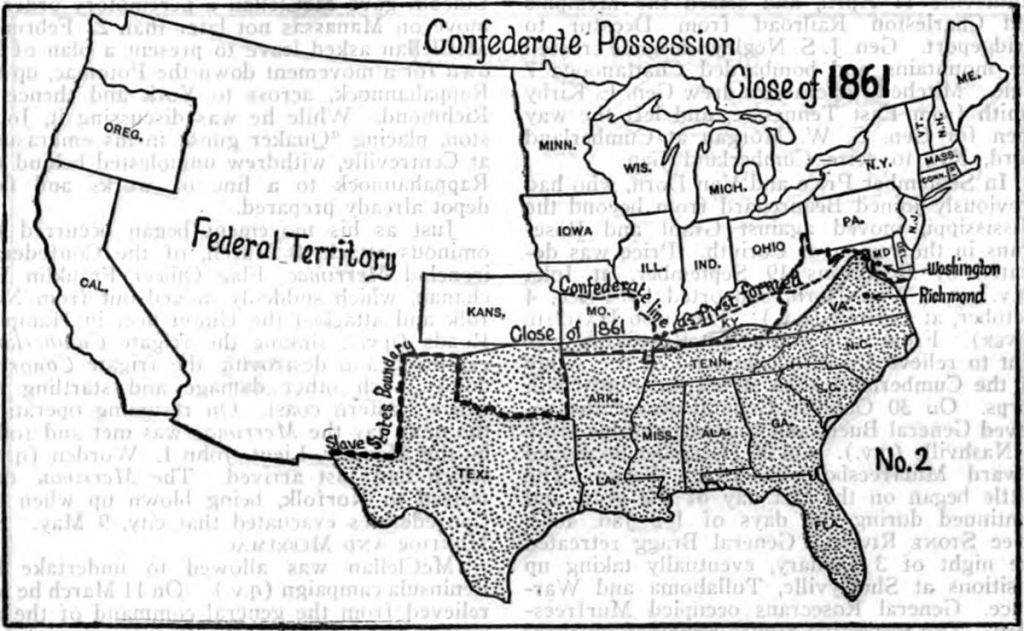
Confederate Possession. 1918, Encyclopedia Americana, https://presidentlincoln.illinois.gov/Resources/7d60e216-cc6c-42a5-b798-5100645f25fb/18620722_EmancipationProclamation-Draft.pdf.
As the south seceded from the Union, Lincoln’s goal was to try and preserve and save it. As the Civil War began though it was unclear to either side at the time what Lincoln’s goals were. In 1862 as the war raged on he created the first draft of the Emancipation Proclamation in which he “declare that on the first day of January in the year of our Lord one thousand, eight hundred and sixty three, all persons held as slaves within any state or states, wherein the constitutional authority of the United States shall not then be practically recognized, submitted to, and maintained, shall then, thenceforward, and forever, be free.”7 When he presented this to his cabinet there were mixed feelings over it, some were for it some were not. At the time he was not ready to release it, the timing was not right. It was also somewhat of a different take from what he had been saying to the public previously, which was odd. In response to Lincoln’s draft of the emancipation, a northern abolitionist Horace Greenley responded with a letter directed at Lincoln, he was angered because he felt Lincoln had not done enough to end slavery. He argued that all slaves under Union control should be set free, also he bashed Lincoln for not enforcing the confiscation acts, “That Act gives freedom to the slaves of Rebels coming within our lines…we ask you to render it due obedience by publicly requiring all your subordinates to recognize and obey it”. 8These acts allowed for slaves who ran to be set free when reaching Union lines but a lot of people near these lines were not enforcing these and allowing slaves to be captured and taken back to the Confederacy, since Lincoln was not doing anything about this it angered an abolitionist like Horace Greenley. The problem is up until this point Lincoln has made it clear he is not for slavery, but he is not looking to end it. He feels that citizens have the right to own slaves if they are in a slave state, and he also believes that African-Americans and Caucasians are not equal, as stated in his 1858 debate with Douglas. In his reply to Greenley, Lincoln’s even states “my paramount object in this struggle is to save the Union, and is not either to save or to destroy slavery.”9 He would go on to write that he would do whatever he needed to save the Union, whether it freed every slave, or freed some, or left them alone.10 So, at this time Lincoln’s ideals really do not correlate with the abolitionist ideals or the radical republicans in the Union. His main goal is to preserve the Union, and try to put it back together, yes he was against slavery but in his mind it was not his goal to end it. A lot of this most likely correlates with what he feels is his responsibility to the United States, as the President he feels his goal is to protect it and try and hold it together. Ending slavery could be seen as a path of destruction, creating a bigger separation than there already is, thus not making it what he feels he should do.
As War raged on Lincoln needed a major victory to publish the Proclamation, and on September 17, 1862 he got it. General George McClellan defeated General Robert E. Lee at the Battle of Antietam, the battle is the deadliest single-day battle in the history of the United States.11 After the battle “he issued his proclamation calling on the revolted states to return to their allegiance before the next year, otherwise their slaves would be declared free men.”12 This was the opportunity for any states in rebellion to rejoin the Union, and keep their slaves at the time, because the Emancipation Proclamation would not end slavery in the Union. Alas, no state would take this opportunity and on January 1, 1863 Lincoln signed the Proclamation which declared “On the first day of January, in the year of our Lord one thousand eight hundred and sixty-three, all persons held as slaves within any State or designated part of a State, the people whereof shall then be in rebellion against the United States, shall be then, thenceforward, and forever, free.”13 As a result slaves in states of rebellion were set free by Lincoln, but because Lincoln had no actual power over these states not as many slaves were set free as we are taught in school. At this time about fifty-thousand slaves were freed in the Union controlled South.14 It would lead to more slaves being freed over time, as the war raged on, but more importantly what the Emancipation Proclamation did was reinvigorate the North. From this point on the Union military was fighting to free slaves as well as preserving the Union, it gave more cause to the North to fight and try and win the war. The cause for fighting changed as “the war to restore the Union as it had been before April 1861 ended on January 1, 1863.”15 This was the turning point in the war, Lincoln ended slavery in the South as a tactic to win. Yes he wanted this and eventually wanted freedom throughout all of the Nation but right now this was not his goal.
After the Emancipation Proclamation of 1863 the North would go on to win the war with a new reason to fight, the abolishment of Slavery. Reasoning behind Lincoln signing the proclamation was a tactical and moral one, since 1858 his ideals have gone from, “I am not, nor ever have been, in favor of bringing about in any way the social and political equality of the white and black races.”16 To freeing the slaves in the south, which would lead to freed slaves in the North. When signing the Proclamation he must have realized this as it only made logical sense that the north would follow. His ideals changed even more as in April 1864 the 13th Amendment was voted on and passed by the Senate but not by the House, so Lincoln would take an active role in trying to pass it.17 In January of 1865, two years after his proclamation, the 13th Amendment was passed and then ratified on December 6, 1865 by the states. The Amendment stated that “Neither slavery nor involuntary servitude, except as a punishment for crime whereof the party shall have been duly convicted, shall exist within the United States, or any place subject to their jurisdiction.”18 Thus ending slavery in the United States of America.
1858- Lincoln has his Debate with Stephen A. Douglas where he states that he does not wish to bring about equality
1860- Elected President of the United States
1861- Gives Inaugural Address saying he has no intentions of messing with the institutions of slavery; States have already began to secede though
1862- Deals with Horace Greenley and thought of publishing the Emancipation Proclamation
1863- Jan. 1st Emancipation Proclamation is signed freeing slaves in states of rebellion
1864- 13th Amendment does not pass through the House, Lincoln get involved
1865- Dec. 6 the 13th Amendment is ratified ending the institution of slavery in the United States
In the span of 7 years Abraham Lincoln’s ideals on how to go about Slavery drastically shifted. He went from not wanting to mess with the institution at all in the slave-states, because he felt it was their right. To eventually freeing the Slaves in the rebelling states, which in turn would free the northern slaves. In 1865 when the 13th Amendment was ratified, only two states still had slavery, Kentucky and Delaware.19 As his ideas shifted through the years it resulted in the Union winning the war, because although they won Antietam, they were really losing the war. Once he decided he would go about trying to shift and make a change on the institution of slavery, the North found purpose for the war which was the real turning point. Without Abraham Lincoln shifting his ideas the War may have not been won by the North and in present day we could be living in a much different world, one that is hard to even think about existing.
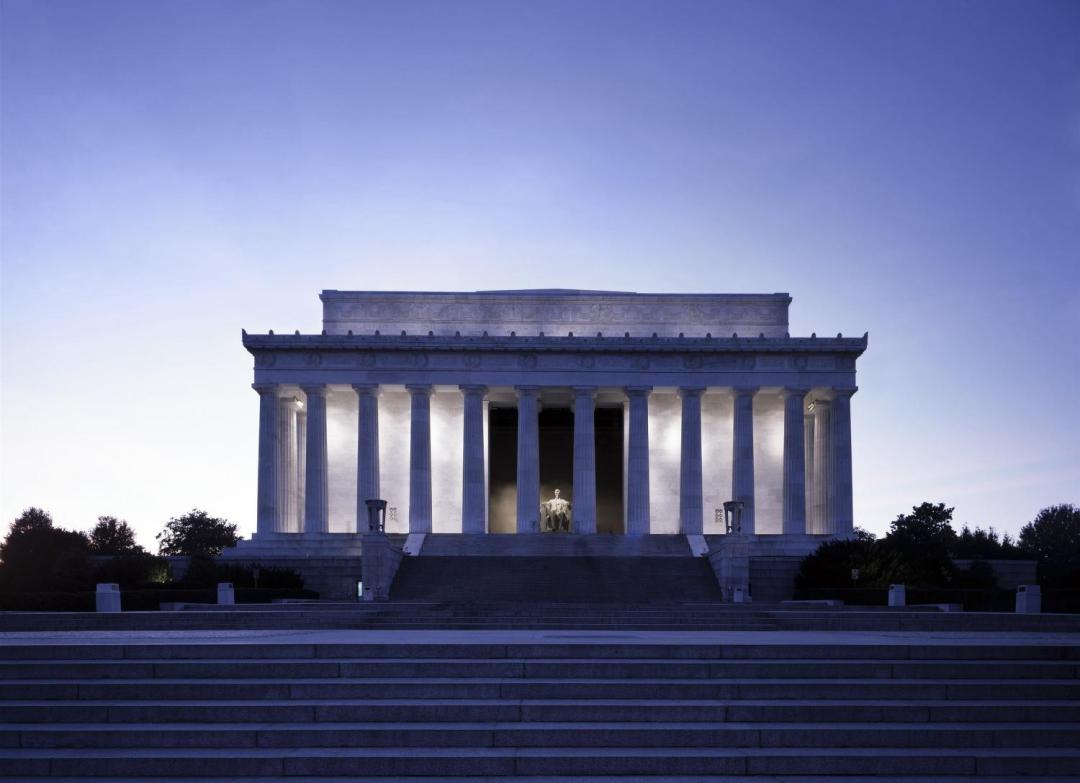
Featured Image: Highsmith, Carol M, photographer. Lincoln Memorial, Washington, D.C. United States Washington D.C. District of Columbia Washington D.C, None. [Between 1980 and 2006] Photograph. https://www.loc.gov/item/2011630586/.
- “Examining Lincoln’s Views on African Americans and Slavery.” Abraham Lincoln Presidential Library and Museum, https://presidentlincoln.illinois.gov/learn/educators/educator-resources/teaching-guides/lincolns-views-african-american-slavery/. ↩︎
- Press and Tribune Co., “Great Debate Between Lincoln And Douglas,” Chicago Daily Press and Tribune Vol. 12, No. 90 (1858): p. 1, https://presidentlincoln.illinois.gov/Resources/0acfbe7b-c165-42cd-8d80-fd6eefc30da8/18581015_LincolnSpeech-DebateSix_ChicagoDPT.pdf. ↩︎
- Press and Tribune Co., “Great Debate,” p. 1. ↩︎
- Abraham Lincoln Presidential Library and Museum, “Examining Lincoln’s Views.” ↩︎
- Abraham Lincoln, “Inaugural Address,” (1861): p. 1, https://presidentlincoln.illinois.gov/Resources/c8600bce-667e-4db8-a0eb-d87015975911/18610304_Lincoln-FirstInaugural.pdf. ↩︎
- Abraham Lincoln, “Inaugural Address,” p. 2. ↩︎
- Abraham Lincoln, “Emancipation Proclamation,” (1862): p. 1, https://presidentlincoln.illinois.gov/Resources/7d60e216-cc6c-42a5-b798-5100645f25fb/18620722_EmancipationProclamation-Draft.pdf. ↩︎
- Horace Greenley, “The Prayer of Twenty Million,” (1862): p. 1, https://presidentlincoln.illinois.gov/Resources/a248ff91-4a37-4034-b849-62c798a316bd/18620819_GreeleyToLincoln-NYTribune.pdf. ↩︎
- Abraham Lincoln, “Response to Greeley’s The Prayer of Twenty Million,” (1862): p. 2, https://presidentlincoln.illinois.gov/Resources/34fde348-fe66-4138-b616-050cc2584b13/18620822_LincolnToGreeley-Letter.pdf. ↩︎
- Lincoln, “Response to Twenty Million,” p. 2. ↩︎
- Abraham Lincoln Presidential Library and Museum, “Examining Lincoln’s Views.” ↩︎
- Britannica, T, Editors of the Encyclopedia, “Emancipation Proclamation,” Britannica, Oct. 20, 2023, https://www.britannica.com/event/Emancipation-Proclamation. ↩︎
- Abraham Lincoln, ” A Proclamation,” (1863): p. 1, https://presidentlincoln.illinois.gov/Resources/f750b5ae-c678-409d-b504-3dcf8a62b82a/18630101_EmancipationProclamation-Script.pdf. ↩︎
- Stanley Harold, “Dramatic Turning Point or Points? Teaching Lincoln’s Emancipation Proclamation,” Oxford University Press Vol. 27 No. 2 (2013): p. 16, https://www.jstor.org/stable/pdf/23489716. ↩︎
- Stanley Harold, “Teaching Lincoln’s Emancipation,” p. 16. ↩︎
- Press and Tribune Co., “Great Debate,” p. 1. ↩︎
- “13th Amendment to the U.S. Constitution: Abolition of Slavery(1865),” National Archive, May 10, 2022, https://www.archives.gov/milestone-documents/13th-amendment?_ga=2.25404093.1823575665.1701879828-1511322482.1701879828#page-header. ↩︎
- National Archive, “13th Amendment to the U.S. Constitution.” ↩︎
- Stanley Harold, “Teaching Lincoln’s Emancipation,” p. 16. ↩︎
How to Site this Article:
Caleb Shealy, “Abraham Lincoln and How his Ideas on Slavery Changed and Won the Civil War,” Digital History at USC Aiken, 2023, https://digitalhistoryusca.com/2023/12/06/abraham-lincoln-and-how-his-ideas-on-slavery-changed-and-won-the-civil-war/.


Hello Caleb, this is a very well-thought-out article, and I am impressed with the timeline of events you have been able to put together to construct your argument on his stance. I have always found it interesting myself that when it comes to abolition, Abraham Lincoln is always the first one brought up when we know for a fact that he did it strictly for strategic reasons and he really didn’t care about the cause itself until it affected him and his union personally. Another thing I always heard that I didn’t see mentioned here is that another reason why he did the Proclamation is because he thought that by freeing the slaves, they might come up to the northern states and fight on behalf of the Union to help bolster army numbers. Whether that was something true or not, I did enjoy this article and found it nice to read.
LikeLiked by 1 person
Hey Caleb,
I found your article very interesting to read, because it presents something that not many people have ever heard of. As someone who wants to teach history for high schoolers, this is something that I plan on talking to them about, because it is something that they do need to know when looking at the Civil War and the events before, during, and after it. Also, I though the inclusion of a timeline was very solid, as it helps put all of your important details into one area.
LikeLiked by 1 person
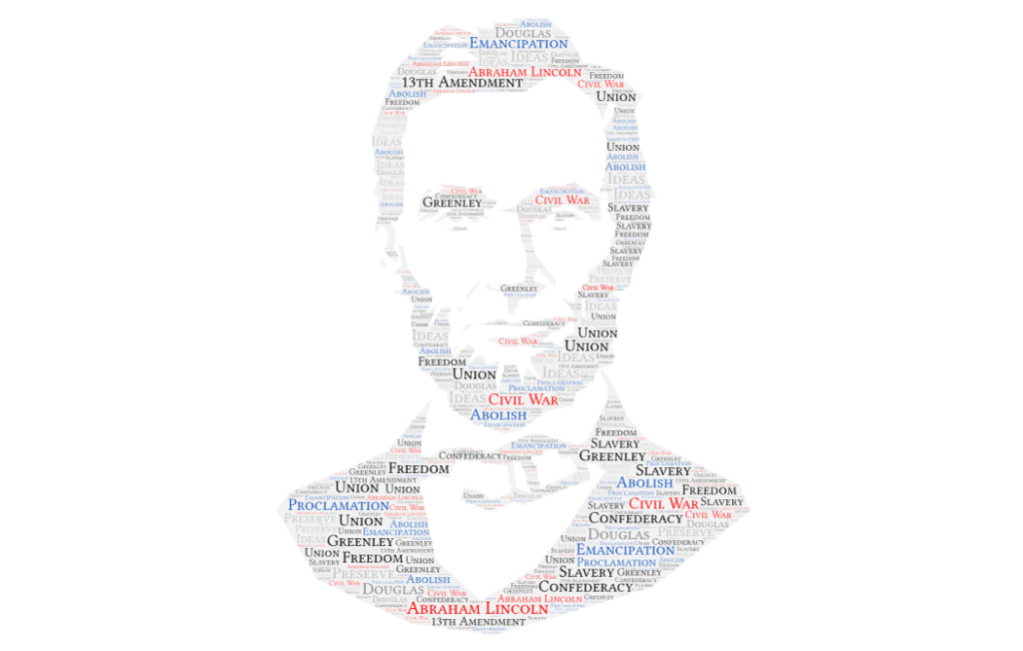
This is a very well thought out article. The digital tools really help you to build your argument and give a good visual representation of what you were talking about. I have always liked civil war history and reading about it in this context was a good read. In my mind I think we romanticize Lincoln. He did a good thing for a selfish reason, but it was still a good thing.
LikeLiked by 1 person
Caleb I enjoyed this, we have tendency only remember on thing that a historical figure did. Lincoln is certainly not an exception to this. Ending slavery was an objectively good thing, but no one should be considered spotless for playing a part in one great thing. Your article does a really nice job of providing some context on a really touchy subject.
LikeLiked by 1 person