“If in our Heart
We do believe
Lord we shall overcome”1
The lyrics of “We Shall Overcome” echo the spirit and belief that motivated the Civil Rights movement. These words describe a journey of faith wherein one is continuously tested and faced with struggles. However, their faith and dedication pushes them forward to overcome all that they will meet. Songs like this characterize the struggle of Black Americans in seeking equality and respect throughout America.
Christian beliefs were central to the lives of many people who pushed for Civil Rights in America. As such, those beliefs were paramount to the movement as a whole. “We Shall Overcome” and spiritual songs of its ilk would often be played before or during Civil Rights meetings or demonstrations. Many famous figures often stood as pillars of the movement as well. One such star was Mahalia Jackson, the gospel singer. She very often partnered with Martin Luther King Jr. and would grace an audience with her voice leading up to a speech or sermon by MLK. Many of his speeches and songs like “We Shall Overcome” shared this theme of triumphing over hatred. An example of this is Dr. King’s speech “The Death of Evil upon the Seashore”. In this, Dr. King speaks of the continual struggle between good and evil but punctuates each with depictions of man’s fall but eventual destined redemption in Christ.2 He utilizes this story to speak to the indomitable nature of good and that it shall always overcome evil and barriers in the end. These songs and sermons complimented each other and the emotions they evoked perfectly. In turn, this also speaks to how faith and the drive for Civil Rights complimented one another as well. The two partnered during the Chicago Movement for Freedom and recordings of this demonstration have been saved.3
This recording characterizes not only how these meetings felt but also the close relationship between members of the movement. These songs would fill the meeting places with the spirit of the movement and inspire powerful emotions among the members. Befitting the thematic influences, churches very often served as the stages for Civil Rights speeches. Sermons were often used as a means to deliver messages about the movement. In the same way theology influenced the message. One such theme in the faith is non-violence. Non-violence was a pillar for many of the people involved in seeking equality in America. Abstaining from violence is Christ-like and harkens to the symbolism of widespread love for all, and how love will overcome racism and hatred throughout the United States. The church served as an “organizational” force for the movement and worked in unison with groups like the Southern Christian Leadership Conference which was tasked with unifying non-violent displays such as sit-ins.4 This was reinforced by many of the heads within the movement, such as Howard Thurman. He was a staunch supporter of non-violent solutions during the 60s. His sermons reflect this, and many preached on the path to social change through non-violent demonstrations. In a series he did entitled “Man and Social Change” he stated
“I shall die, but that is all that I shall do for death. I am not on death’s payroll. I will not tell him the whereabouts of my friends, nor of my enemies either. Though he promise me much, I will not map him the route to any man’s door”.5
The “Man and Social Change” lecture and many more speeches delivered by Thurman have been saved in the Howard Thurman Digital Library. To listen to this and many more of his sermons you can access the digital archive here.
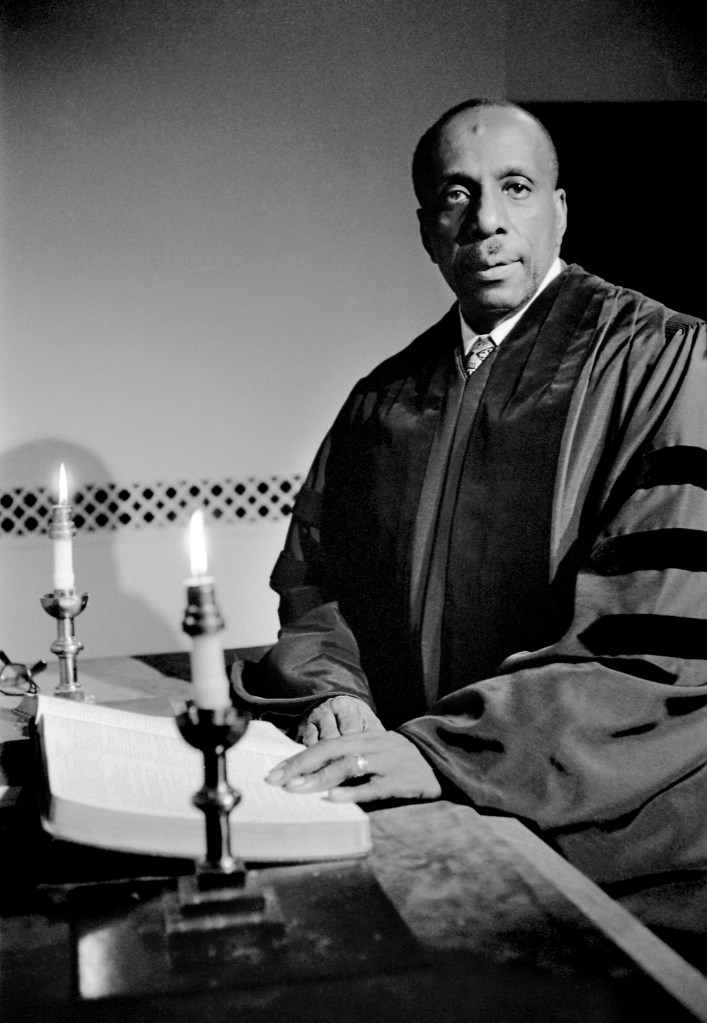
He and many figures held strongly to the belief that refraining from raising their hands would prevent people from painting the picture of African Americans as violent. For Howard Thurman, his commitment to non-violence also speaks to a level of syncretism within the movement’s philosophy as well. Syncretism as a concept is best described as the crossroads where different religious beliefs or schools of thought meet and influence one another. Thurman himself travelled to India and met with Mahatma Gandhi, who led the non-violent campaign for Indian independence from British rule. His success and methodology greatly inspired Thurman and his belief in what non-violence could achieve. Thurman went on to speak of the similarities of the struggles in India and America; speaking to the holistic experience of his journey he said “I had to find my way to the place where I could stand side by side with the Hindu, the Buddhist, a Muslim and know that the authenticity of their experience was identical with the essence and authenticity of my own”.6 In contrast to the solidarity seen in Mahatma Gandhi and Howard Thurman’s meeting, there was tension between some Christians in America when it came to the Civil Rights Movement.
Martin Luther King Jr. was arrested in Birmingham Alabama following a non-violent display. Whilst in his prison cell, several high-ranking members of the religious community in the American south made statements criticizing MLK and the movement. In response, Dr. King wrote what is called the “Letter From Birmingham Jail”.
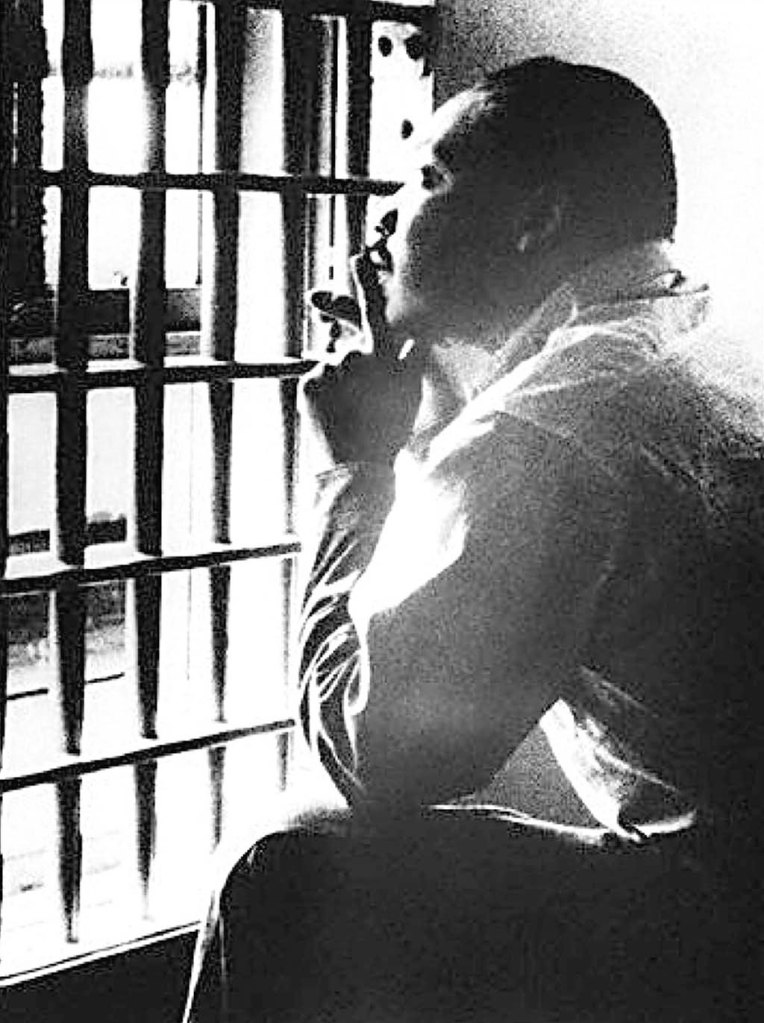
One of their major statements against Dr. King was claiming he and his partners were “extremists”. Rather than responding with criticism of his own, MLK outlines the figures who were also called extremists in their time, chief among them being Jesus Christ. In the letter, he refers to Jesus as an “extremist of love” alongside others such as Paul, Martin Luther, and Abraham Lincoln.7 Dr. King explains that by these standards he considers himself in good company with the extremists. In addition, he explains his disappoint that men of God would not see the purpose of their struggle nor the true intent behind. But in the place of responding as they did to him; he instead harkens to men of faith that themselves sought out great change in their eras.
Faith was central to the movement for Civil Rights. It was a means of organization and outreach, a symbol of solidarity not only for African Americans in the south but for oppressed peoples throughout the world and was a constant source of inspiration and motivation to seek equality in America. No singular work will ever be enough to describe how integral faith and the church were to the Civil Rights Movement. However, fittingly, a verse in the book of Matthew symbolizes the true belief and dedication that sat within the hearts of the activists.
Truly I tell you, if you have faith as small as a mustard seed, you can say to this mountain, ‘Move from here to there,’ and it will move. Nothing will be impossible for you.
Matthew 17:208
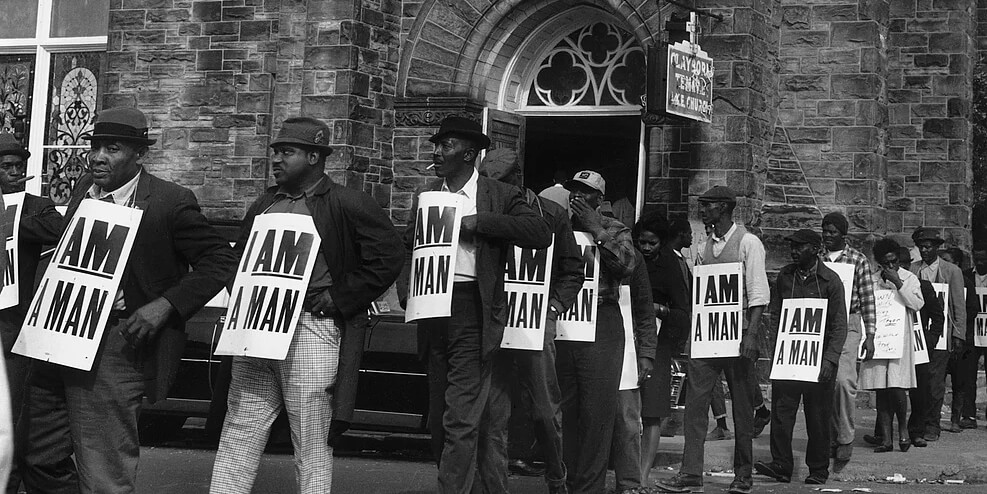
Featured Image: Ernest C. Withers, AFSCME, https://www.afscme.org/blog/church-tied-to-afscme-and-civil-rights-history-now-a-national-landmark
Sources:
- Jackson, Mahalia, “We Shall Overcome”. Recorded 1964. Columbia Records, YouTube, uploaded by Mahalia Jackson – Topic, December 12th, 2014. https://www.youtube.com/watch?v=2W02hDYBcqU ↩︎
- King Jr. Martin Luther, “”The Death of Evil upon the Seashore,” Sermon Delivered at the Service of Prayer and Thanksgiving, Cathedral of St. John the Divine”, Jack Miller Center “The Civil Rights Movement” https://jackmillercenter.org/fci-resource/civil-rights/ ↩︎
- Mahalia Jackson singing & Martin Luther King Jr. preaching at Church together. YouTube, uploaded by Omar G. December 9th, 2014, https://www.youtube.com/watch?v=odHqG1rA4M8 ↩︎
- Thurman, Howard, “Man and Social Change, Part 3: Violence and Nonviolence, 1969 March 21,” The Howard Thurman Digital Archive, accessed December 11, 2023, https://thurman.pitts.emory.edu/items/show/57. ↩︎
- Thurman, Howard, “Man and Social Change, Part 3: Violence and Nonviolence, 1969 March 21,” The Howard Thurman Digital Archive, accessed December 11, 2023, https://thurman.pitts.emory.edu/items/show/57.
↩︎ - Sommers, Amy, On the Origins of Non-violence in the Civil Rights movement: Howard Thurman in South Asia, 1935-1936, Black Past (October 25th, 2023). https://www.blackpast.org/global-african-history/perspectives-global-african-history/on-the-origins-of-non-violence-in-the-civil-rights-movement-howard-thurman-in-south-asia-1935-1936/ ↩︎
- King Jr., Martin Luther, “Letter from Birmingham Jail” (August 1963, Accessed through the California State University) https://www.csuchico.edu/iege/_assets/documents/susi-letter-from-birmingham-jail.pdf ↩︎
- The Holy Bible, Matthew 17:20, New International Version ↩︎
How to cite this article:
Chesler D. Mathis, “Faith as an Actor, Motivator, and Symbol in the Civil Rights Movement” Digital History at USCA, 2023. https://wordpress.com/post/digitalhistoryusca.com/1917


