How did representations of Vietnam veterans align with realities, such as veteran drug use, homelessness, and PTSD.
The Vietnam War is considered one of the United States most controversial wars, from November 1955 – April 1975 coming after the Korean War just 3 years prior. The country was completely divided, loud cries and protest were opposing the country’s involvement in any capacity. The political outcry matched that of the citizens with politicians like senators Al Gore Sr, J. William Fulbright, and John Cooper, along with Senator Eugene Mccarthy who ran for president on an anti-war campaign. But with all the disdain from a large portion of the country we continued to send citizens to fight for a war we did not support. Well at least I will be taken care of for life, I mean I am a vet and for fought for my country right?
Being a patriot was not completely lost in America, there were veterans of previous wars who were proud that they served and were pro-Vietnam. So much so that on October 30, 1965, they organized a prowar parade led by veteran groups including the American Legion, and Veterans of Foreign Wars proudly marching down Fifth Avenue in New York City loudly counting cadence for everyone to hear. But these men were the few, the proud, and the lucky, as they were able to march in some form down those streets as many cannot do the same. But the difference between those who fought in World War II and this ongoing Vietnam War was what they were fighting for. There was an understanding as a country that what Hitler led Germany was doing we could not stand for and could be used as our anchor to our involvement.
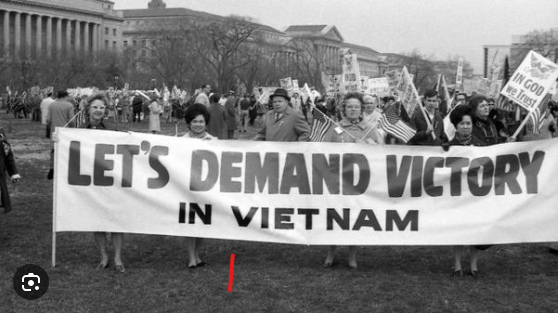
But Vietnam was different, it was seen as some form of greed or a conflict that we had no reason to be a part of. In the 1995 movie Dead Presidents, Chris Tucker who plays Skip expresses his lack of interest, to paraphrase, “I’m not fighting no white man’s war.” Tucker’s character did end up going to the war, and during his time there is a scene of Tucker depicts how most soldiers coped with passing the time, with drugs and prostitutes. The mental toll of seeing your friends and fellow battle buddies wounded or lots of times coming back to camp with loss of limbs if they even survived was not an easy sight for even the toughest of men.
For the majority, the habits that were created overseas came back home with them but for most were heightened due to not having the distraction of war but rather the nightly nightmares of the hell they had come from. Later in the movie Skip’s best friend Anthony who came back a year after Skip returned home is excited to see his friend sitting outside a convenience store so he walks up to him and says “Straighten up Marine” but notices how far gone he is due to the drugs. As per the National Library of Medicine, “ Vietnam veterans were more likely to have begun using heroin during their military service, and they were more likely to say that their service experiences had affected their use of drugs, usually citing relief of fear and tensions of war.”
Not every veteran fell victim to drug use, even though there were many. Even more suffered or are still suffering from PTSD due to what was witnessed while they served. PTSD, which can be shown in a multitude of ways, as per the VA (Veteran Affairs) “Post-traumatic stress disorder (PTSD) is defined as having flashbacks, upsetting memories, and anxiety following a traumatic event. It was first officially recognized as a mental health condition in 1980, only five years after the end of the Vietnam War. “This is a combination of two things, the veterans that came back showed such severe symptoms that something had to be wrong, and the government was not prepared to help these struggling war survivors.
In 1982 the movie Rambo with Sylvester Stallone was shown how hard it can be coming back into a world that just doesn’t understand or acknowledge what a vet has gone through during their time overseas. Not being able to hold a job, seeing people protest against the things he took pride in doing for his country, and even calling him a baby killer. See the wrong was in past wars people like John Rambo were written off and called “shell shocked” but not being met with some form of empathy.
In 1983, Congress took steps towards helping by requesting that the VA conduct studies on vet’s postwar psychological problems which were known as the National Vietnam Veterans Readjustments Study (NVVRS), the study showed that 15% of veterans suffered from PTSD which was more than likely less than the actual amount does to the number of people that were not able to participant for various reasons or being misdiagnosed since this was a fairly new area in psychology.
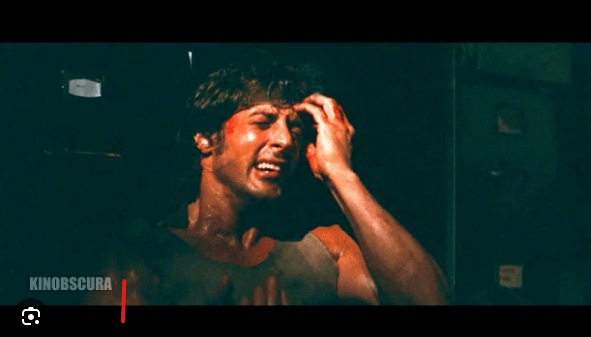
In Rambo, Sylvester Stallone also dealt with another big problem for veterans when they came back, homelessness. Rambo, who was an obvious vet, was also homeless trying to find food on his way to Portland, where he was going to walk. He was then approached by the Sheriff who let it be known that he didn’t want him in his town because it would attract other homeless vets. This was probably a common occurrence due to the influx of homelessness since the war had ended. The VA assessed that there were 10,524 homeless veterans with 50% of those coming from Vietnam veterans all by themselves.
But how could that be when the government is supposed to take care of those who served. Well, the combination of a Drug habit and PTSD which makes it hard for you to get a job, plus the stigma behind going to war can result in not being able to afford a place to lay your head.
The reality for Vietnam veterans when they came back home was that it was not easy for most. Most came back home thinking that they would be honored, and grateful that they survived the war, but instead had just as hard of a time just in a way they did not imagine. The good is that the transgressions of those who served in the Vietnam War made the country put in place many different forms of support to lessen the load on veterans who served after.
Footnotes
- Andrew E. Hunt, “Chapter 1,” essay, in The Turning: A History of Vietnam Veterans against the War (New York: New York University Press, 2001).
- 1. Dead Presidents (United States: Hollywood Pictures, 1995).
- 1. Mintz J;O’Brien CP;Pomerantz B;, “The Impact of Vietnam Service on Heroin-Addicted Veterans,” The American journal of drug and alcohol abuse, accessed December 8, 2023, https://pubmed.ncbi.nlm.nih.gov/507021/#:~:text=Vietnam%20veterans%20were%20more%20likely,fear%20and%20tensions%20of%20war.
- 1. Veterans Health Administration US Department of Veterans Affairs, “Va.Gov: Veterans Affairs,” Protect your health, May 7, 2015, https://www.publichealth.va.gov/exposures/publications/agent-orange/agent-orange-summer-2015/nvvls.asp.
- 1. Veterans Health Administration US Department of Veterans Affairs, “Va.Gov: Veterans Affairs,” Protect your health, May 7, 2015, https://www.publichealth.va.gov/exposures/publications/agent-orange/agent-orange-summer-2015/nvvls.asp.


