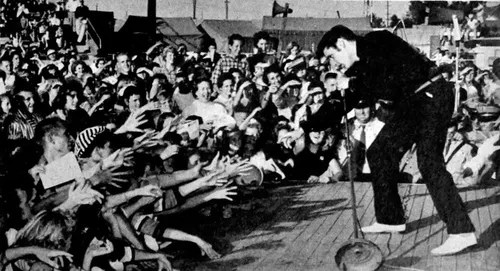
Elvis Presley is one of the most impactful and well-known figures in the history of American popular culture history. Although he started with a more gospel style of singing, he eventually shifted to incorporate the African American style known as Rhythm and Blues to create his form of Rock n’ Roll music, which caused him to become incredibly popular, especially during the 1960s and 1970s[i]. This cultural fusion of signing and performing styles contributed to create a new movement in which the cultural barriers in music were dissolved and melded together. In fact, Presley, alongside many other artists in the Rock n’ Roll genre such as Chuck Berry, are credited with challenging the racial institutions in areas such as the American South[ii]. However, Elvis was not seen as a beloved figure by everyone; there were many groups of people in America who were very critical of his use of African American culture, especially those from the African American community. Many of which claim that he stole their musical identity, and even used song from their creators, such as “hound dog” by Big Mama Thornton. This is but one of many different perspectives that cultural groups have on Presley, and this is not even the only one from the African American community, as he has is defenders with them as well. While Elvis Presley may be viewed as one of the most famous figures in American pop culture, his history and path to the top is full of criticism and differing viewpoints across cultures in the United States.
Elvis Presley – Hound Dog (1956), YouTube, December 2010, https://youtu.be/MMmljYkdr-w?si=M0Clr7CoONuDXqlz.
It is important to first establish the style of Rhythm and Blues and also how it contributed to the Rock n’ Roll genre. The musical style of Rhythm and Blues originated in post-World War II America by African American artists to create a new style of dance music. It combined elements of jazz, blues, and also gospel music to create a hybrid that quickly became a huge part of African American culture. One major reason for its spread was a result of many African Americans moving to urban centers to avoid racial oppression in the South. Many artists wished to create songs to encapsulate what they had experienced, and used R&B to create their own mark and style in the cities in which they lived. Rock n’ Roll arose roughly twenty years after R&B as a fusion of the genre and many other different elements. However, some consider it to have begun in the 1920s, but it was not recognized as an actual genre until the early 1950s. Particularly, Rock n’ Roll was created with the style of R&B, country, urban blues, and even elements of popular culture. However, one of the most important parts of Rock n’ Roll is the rebellious spirit that it held as a result of its primary audience: teenagers. Effectively, Rock n’ Roll took the style of R&B and fused it with the country and urban styles as well as the rebellious spirit that teenagers felt at the time. This was the first major time in which the younger generations and popular culture established the musical style, and this can still be seen in modern history with grunge in the 1990s and even modern rap today.
Although these two genres may seem different from an outside look, many R&B singers did not feel as if Rock n’ Roll was any different from their own style, and this is where the main controversy of the genre began. Effectively, Black Rock n’ Roll artists help influence and create White artists in the genre, in which they would cover and recreate the songs that Black artists had made. This can be seen with Elvis with “Hound Dog”, as mentioned earlier. However, the main thing to note here is that these artists often did not start their careers in Rock n’ Roll, but rather in different areas and became famous from this recreation of music. Elvis was one of these musicians, in that he became famous through using Rock n’ Roll to recreate R&B music of the past, as mentioned before. This is where the controversy began on many different sides and cultural groups, as Elvis’s fame sprouted around Rock n’ Roll and African American musical styles.
The first perspective to look at of Elvis is that of his fanbase and the generations before them, as most of them are of the same cultural background in the 1950s and 60s. Looking at one of Presley’s performances from 1957, we can see that his primary audience is White teenagers or younger White Americans. This is very important to note, especially because of race relations in America during the 1950s and 1960s. At this point in American history, segregation and discrimination are at one of their highest points, and the divide between was is considered to be “White culture” and “Black culture” is immense. Elvis, however, was one to challenge these cultural differences in his performing style. Elvis was a Rock n’ Roll singer, and performed in a way that was much different that other White artists of the time. Elvis would move around on stage and dance in ways that were more suggestive and not considered normal for one to do, which would be amplified with roaring crowds dancing and moving together as he performed[iii]. While Elvis was very popular with younger audiences, the older generations of White Americans were not fond of him, especially those in the Southern United States. His musical style was seen as “Black music” at this time, and they were opposed to their children listening to and being fans of Presley because of this. This is where the rebellious teenage spirit of Rock n’ Roll took hold, in that White teenagers in America continued to listen to Elvis despite what their parents thought or said. In fact, many White teenagers in America enjoyed his style “even though they were not supposed to like his ‘Rock n’ Roll’ type of music”[iv]. Effectively, Elvis’s primary audience listened to him for two different reasons: because they liked him, and because they knew that they were not supposed to listen to him. This is where the main controversy lied for White Americans, which was both a difference in generational and progressive ideals. The controversy of Elvis Presley with White Americans in the 1950s and 60s is a product of the time. Due to the race relations and culture of the era, Elvis was seen as a taboo artist for a long period of time.
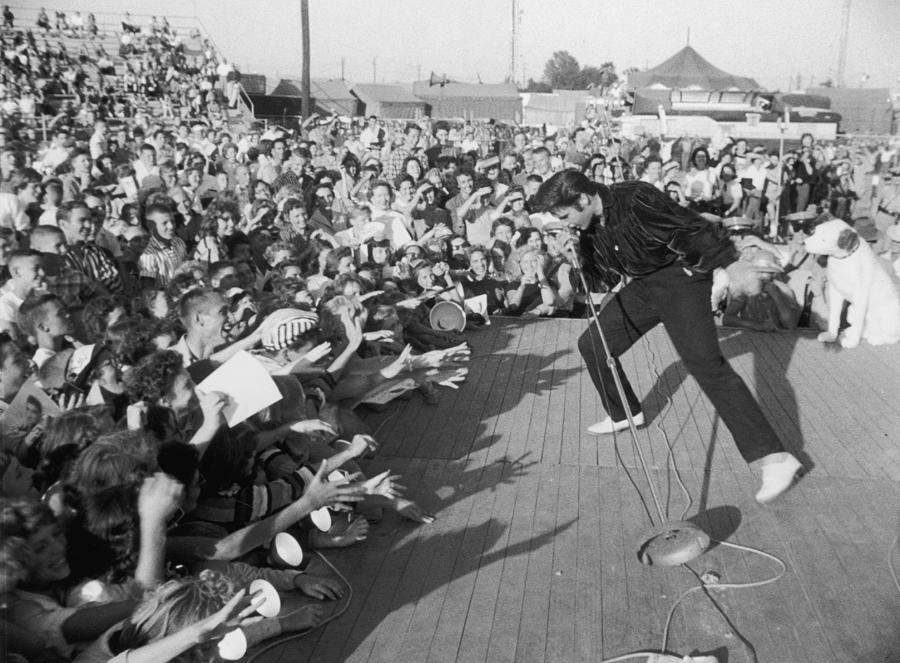
Presley Performs, Hulton Archive, 1957, Uploaded January 19, 2019. https://photos.com/featured/presley-performs-hulton-archive.html.
The African American perspective of Elvis is much more divided, however, stemming from the type of music he made and the way he performed it. Due to Presley’s genre originating with the African American community, there was a feeling present that he had misappropriated their music and culture in his songs[v]. Many African Americans felt that he used their style of music to become famous and gain popularity, while they were doing the same thing and not getting any traction. As mentioned earlier, Presley had already made a cover of “Hound Dog” by Big Mama Thornton, which did not help his case in this regard. To some, it felt as if he was trying to take their culture as his own, which at the time was not something that many African Americans were comfortable with[vi]. This caused many African Americans to become anxious and worry that Presley was going to steal their culture from them and make it something else. This caused there to be a greater sense of resentment for Elvis with Black Americans, because this anxiety would only continue to spread by word of mouth. People did not trust that Elvis was using their culture in a respectful way, and rather that he was attempting to take it for himself. This issue would only continue to persist after his death, and would not be resolved for an incredibly long amount of time.
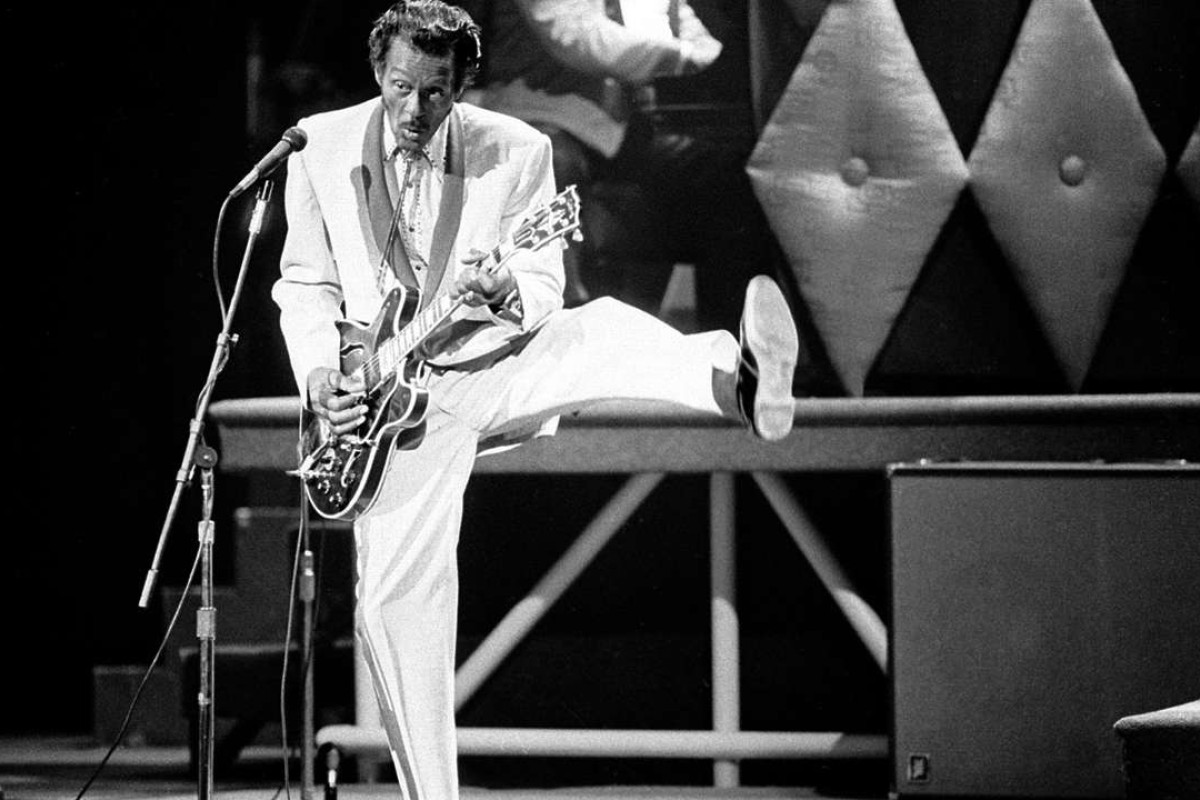
Chuck Berry performs during a concert celebration for his 60th birthday, AP, 1985, https://cdn.i-scmp.com/sites/default/files/styles/1200×800/public/images/methode/2017/03/20/3d746376-0cb6-11e7-8938-48dffbf7165d_1280x720.jpg?itok=8g3DD3SA.
However, not all African Americans had resentment for Elvis and his music. There are some who claimed that he was very respectful of their music, and that he would study it closely, perform it perfectly, and took it very seriously[vii]. This occupies a completely different stance than that of others in the Black community, in which Elvis encapsulated their culture respectfully and perfectly, rather than misappropriating and taking advantage of another group’s culture. The main issue within the Black community with Elvis was that he took their style of music and profited from it, which cannot be truly denied. Presley did use Rock n’ Roll to become famous and make a profit. However, not all African Americans agree on whether or not he used it properly. There are some who believe that he was respectful and used their musical culture. However, those who supported Elvis from the African American community say that he brought their culture to the center stage and made it famous, which in turn helped their artists become famous in the long run[viii]. Effectively, Elvis’s use of Rock n’ Roll and R&B helped bring forward the African American culture of song and dance, which helped establish a new style of popular culture over the next decades. Overall, the African American community in America was very split on Elvis Presley, and many in their community are still unsure of what to think in regards to him.
In reflection, all of the Controversy that surrounded Elvis stemmed from one main point, being race relations in the United Sates. In the 1950s and 60s, there was a major divide between the two cultural groups that had been created over the past decades before this point. They had distinct cultures, which obviously includes music and dance. Having someone from the White community perform in a way that would be considered “Black music” was unheard of at this point in history, because of segregation and discrimination of the African American people. This, in turn, caused his music and style of performing to be almost shunned by the older White community, but embraced by a younger, more rebellious White youth. African Americans, on the other hand, were very split on whether or not he was a positive figure for their culture. The point here is that the controversy of Elvis Presley stemmed almost entirely from race relations of the time period. It would be very interesting to see an audience reaction today to him, as his style of form of cultural fusion is something much more common today than it was almost seventy years ago.
Regardless of his controversial nature, there is one thing about Elvis that is undeniable; he challenged the status quo of race relations in America in a way that helped remove the idea of racial exclusivity to music. In other words, after Presley, there were many people of different races and cultures making music about what they thought, such as The Rolling Stones in the 1970s. Their performing style would have been unheard of before if it was not for Elvis, which is important to note. Another way to say this is that Elvis helped progress race relations in America in a positive manner. More people became aware of African American culture and music through Presley, which would in turn make them more accepting and fond of the music and style that they had.
In conclusion, regardless of the controversy surrounding his name, Elvis Presley helped establish a new age in America in which it did not matter your background, but only the songs that you made and what you sang about. He challenged the status of race relations in America in the 1950s and 60s, and used African American culture to do so. However, his career and legacy is surrounded by controversy and question as to his use of African American culture and how he presented it. However, Elvis Presley remains one of the most popular figures in the history of American popular culture, and his impact on musical culture and style can still be felt today.
How to Cite this Article
Palmer Wiggins, “Elvis Presley: How Music can Lead to Controversy in Race Relations and American Popular Culture,” Digital History at USC Aiken, 2023, https://wordpress.com/post/digitalhistoryusca.com/1659.
[i] “‘Know Thyself’.” Common Bond (East Moline, Illinois), February 18, 1977: 2. Readex: America’s Historical Newspapers. https://infoweb-newsbank-com.eu1.proxy.openathens.net/apps/readex/doc?p=EANX&docref=image/v2%3A12EF231A9F977E70%40EANX-12F0C8D006D37B78%402443193-12EF6BC991481668%401-12F6B39485E09438%40%2522Know%2BThyself%2522.
[ii] Micheal Bertrand, Race, Rock, and Elvis (University of Illinois Press, 2000), 41.
[iii] “The Ramblin Rose.” Aiken Standard (Aiken, South Carolina), June 29, 1956: Newspaper Archive. https://access-newspaperarchive-com.eu1.proxy.openathens.net/us/south-carolina/aiken/aiken-standard-and-review/1956/06-29/page-4/
[iv] “Agin’ Rock n Roll, But Elvis Is Our Boy.” Crusader (Rockford, Illinois), October 5, 1956: 1. Readex: America’s Historical Newspapers. https://infoweb-newsbank-com.eu1.proxy.openathens.net/apps/readex/doc?p=EANX&docref=image/v2%3A12EEDB052B4D6360%40EANX-12EF857932FBE140%402435752-12EF7001F3D45368%400-12F68A07A2EC7AFC%40Agin%2527%2BRock%2Bn%2BRoll%252C%2BBut%2BElvis%2BIs%2BOur%2BBoy.
[v] Michael T. Bertrand. “Elvis Presley and the politics of popular memory”, Paragraph 2. Southern Cultures 13, no. 3 (2007): 62+. Gale Academic OneFile (accessed December 4, 2023). https://link.gale.com/apps/doc/A169228173/AONE?u=uscaiken&sid=bookmark-AONE&xid=ccb554b7.
[vi] Michael T. Bertrand. “Elvis Presley and the politics of popular memory”, Paragraph 5. Southern Cultures 13, no. 3 (2007): 62+. Gale Academic OneFile (accessed December 4, 2023). https://link.gale.com/apps/doc/A169228173/AONE?u=uscaiken&sid=bookmark-AONE&xid=ccb554b7.
[vii] Michael T. Bertrand. “Elvis Presley and the politics of popular memory”, Paragraph 11. Southern Cultures 13, no. 3 (2007): 62+. Gale Academic OneFile (accessed December 4, 2023). https://link.gale.com/apps/doc/A169228173/AONE?u=uscaiken&sid=bookmark-AONE&xid=ccb554b7.
[viii] Michael T. Bertrand. “Elvis Presley and the politics of popular memory”. Southern Cultures 13, no. 3 (2007): 62+. Gale Academic OneFile (accessed December 4, 2023). https://link.gale.com/apps/doc/A169228173/AONE?u=uscaiken&sid=bookmark-AONE&xid=ccb554b7.


Wow Palmer, I really enjoyed this read. As an avid Elvis fan, it never fails that when I see his name I will read it instantly. I will add, however, that I consider Chuck Berry the true king of Rock & Roll, so I enjoyed that mention as well.
Elvis was really a pioneer for race relations and I thought you did a good job of highlighting that.
LikeLiked by 1 person
Hi Palmer,
I enjoyed reading your blog. It was interesting and thought-provoking. You also presented both sides of the argument effectively by using his influence on the Rolling Stones as an example. He was very popular when I was growing up, and you were correct that the older generation was critical of him. Great post!
LikeLiked by 1 person
I really enjoyed reading this article. I think this is an important topic in history. Although there is controversy surrounding it, like many things today, Elvis did a service to American pop culture and music. I would also like to add I agree with Carson’s comment, Chuck Berry is the king.
LikeLiked by 1 person
Like Carson said, I think you did a good job of covering the racial controversy surrounding Elvis’ popularity. One point I was thinking of while reading is that white musicians imitating African American styles was not uncommon, but the purpose was always mocking and highly offensive (minstrel shows). This article shows that although he was profiting from it, Elvis was trying to be respectful to the people he was emulating.
LikeLiked by 1 person