82 years ago today, December 7th, 1941, is a date etched in history, or is it? What happened at Pearl Harbor is talked about a lot through many different digital media types. Pearl Harbor is a focal point in learning throughout basic education in the American school system. There are many digital archives that include a section on Pearl Harbor. Most of these archives agree on what happened that December day in 1941. In the 82 years since this infamous day in American history, we have written about it in print and digitally, and we have made films about it. Pearl Harbor has been misremembered and remembered through many types of media as media evolved and the generations learned through the actions and stories of older generations. As the newer generations began to acquire their historical memory from digital sources such as online videos and movies and the memories of family and friends, the memory of Pearl Harbor was spoiled. With a lack of fact checking and consultation of professional historians that comes from such fast created content that the internet allows, this is one way a day of such ‘infamy’ could be so intently misremembered. Pearl Harbor was remembered in the ways of memorials and museums mainly limited to Hawaii but also on the mainland, these digital exhibits allow for a good memory of Pearl Harbor to be built. Pearl Harbor is best remembered through physical and digital media produced as museum exhibits or map projects and misremembered best through Hollywood film and harmful ideals spread through some oral history.
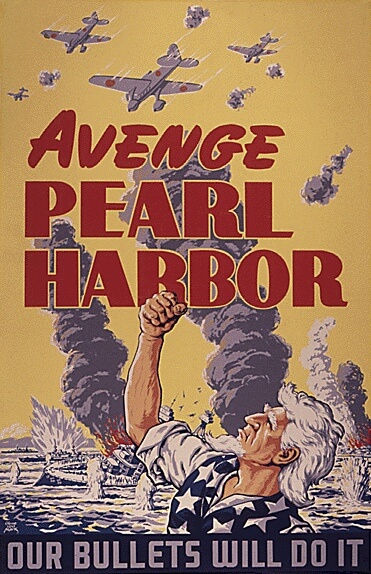
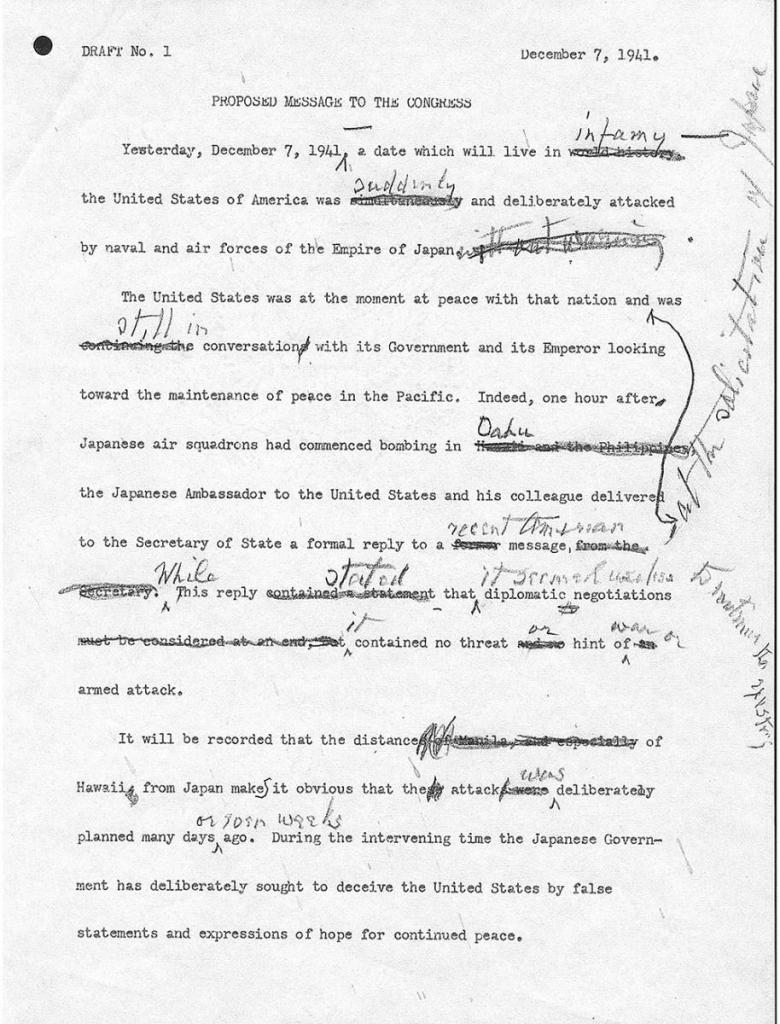
To understand the misremembering of Pearl Harbor, we need to understand the true events of Pearl Harbor. According to the US Census websites Pearl Harbor fact sheet, Pearl Harbor in short was a Japanese surprise bomb attack on a U.S Naval base in 1941 during the global events of World War II. The Japanese sent an encrypted message, and the Americans intercepted it. This allowed advance notice of something going on in Japan. These intercepted messages and intelligence told them Japan was up to something. Despite this, America was still unprepared for the successful sneak attack on Pearl Harbor. The attack proceeded in two waves that devastated the Harbor on this Hawaiian island. This attack led to almost immediate war declaration from the United States. When FDR came to the press on December 8th, 1941, a famous speech was delivered to the general public. This was an announcement of the events in Hawaii and a plea for a declaration of war from congress. This was the cause of the United States entering World War II. Prior to the attacks the United States did not want to involve themselves in WWII with the memory of WWI still resting on their shoulders.
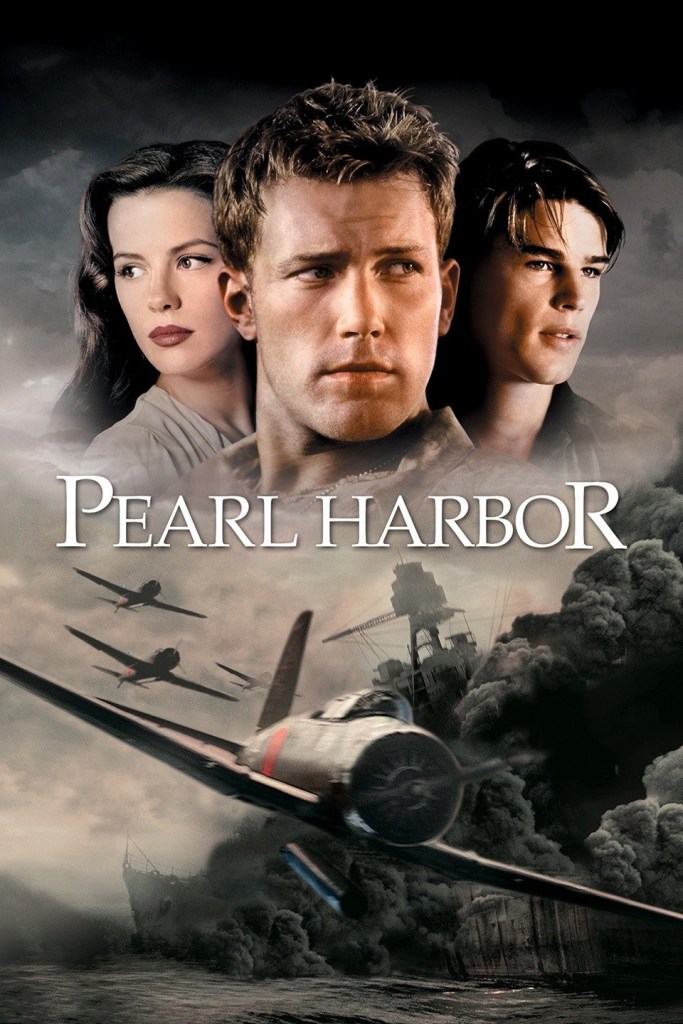
In the sense of digital media portraying a less than complete view of actual events surrounding Pearl Harbor, movies have missed the mark. Through a lot of digital avenues, the events of Pearl Harbor have been misremembered and misrepresented. Of course, when you think of the media, or Hollywood, there’s an element of entertainment needed to allow for the creation of this digital media. I think you can overlook the focus on the entertainment and still attempt to build a more historically accurate storyline to depict these historical events on the big screen. I think for America specifically, we have a problem as a nation with allowing films based on historical events to be a source of fact for a lot of people. This could boil down to a population that is less inclined to learn or read about history. In my example of Pearl Harbor,1 the 2001 Ben Affleck film, an exaggerated portrayal of the movements of Japan were included, such as, having the Admiral of the Japanese Navy aboard the aircraft carrier that housed the attacking planes for Pearl Harbor. Many of the wrong planes were used in filming as well as planes that were not available until years later. This is not a big deal to most regular movie goers, but it poses a problem to a society that likes to learn through digital media. The actual portrayal of the attack was less than accurate failing to describe how many of American pilots took to the skies in order to fight against the Japanese. Another main event of Pearl Harbor was the separate waves of attack by the Japanese. In the film, the attack was continuous with no breaks. This was inaccurate to the events of Pearl Harbor. This was a cause of misremembering for the general public of America because they find comfort in building historical memory on the basis of film. People who watch films about historical events or movies based on true events would love to use the film to make their own historical memory. This film is available to watch on the streaming service Max and to rent through these other options for you to form your own opinion.
The reaction to the film of the general public was positive. The public enjoyed the film. Critics found the film a horrendous portrayal of the events on December 7th, 1941. This is evident by the rotten tomatoes score of 24% from critics and 66% from audiences. In a Rolling Stone article critiquing the film on May 25, 2001, author Peter Travers tore into the entire film from storyline, historical inaccuracies, character development, and casting. The most telling quote to express Travers feelings of the film is when he said, “With Pearl Harbor, they’re trying to pass off shoddy goods as history and get a piece of the Oscar pie that’s been feeding the ego of Titanic director James Cameron.” This shows strong feelings from Travers that this movie was a bunch of bull hockey and not worth the film it was recorded on. This is a popular opinion of critics of the film. Roger Ebert on the same day, May 25, 2001, released an article describing Pearl Harbor2 as “40 minutes of redundant special effects, surrounded by a love story of stunning banality…the filmmakers seem to have aimed the film at the audience that may not have heard of Pearl Harbor, or perhaps even of World War Two.” This is an even harsher critic than that of Travers. The website CinemaScore.com uses audience perception to give scores, which Pearl Harbor3 received an A-. In accordance with the thoughts of the critics Pearl Harbor4 did not win any major awards for acting or the story, the awards won were for the battle scene and the effects that went into it. The world saw it as a good movie and perceived it well. This movie being seen by so many people and winning major awards, although not for the acting, means many people at the time let this film show them what happened. The majority of the people who watched it were not there and not survivors, so this was what people had available at the time to visualize what it might have been like to be there that infamous day. This is a reason this film could cause confusion about the historical event.
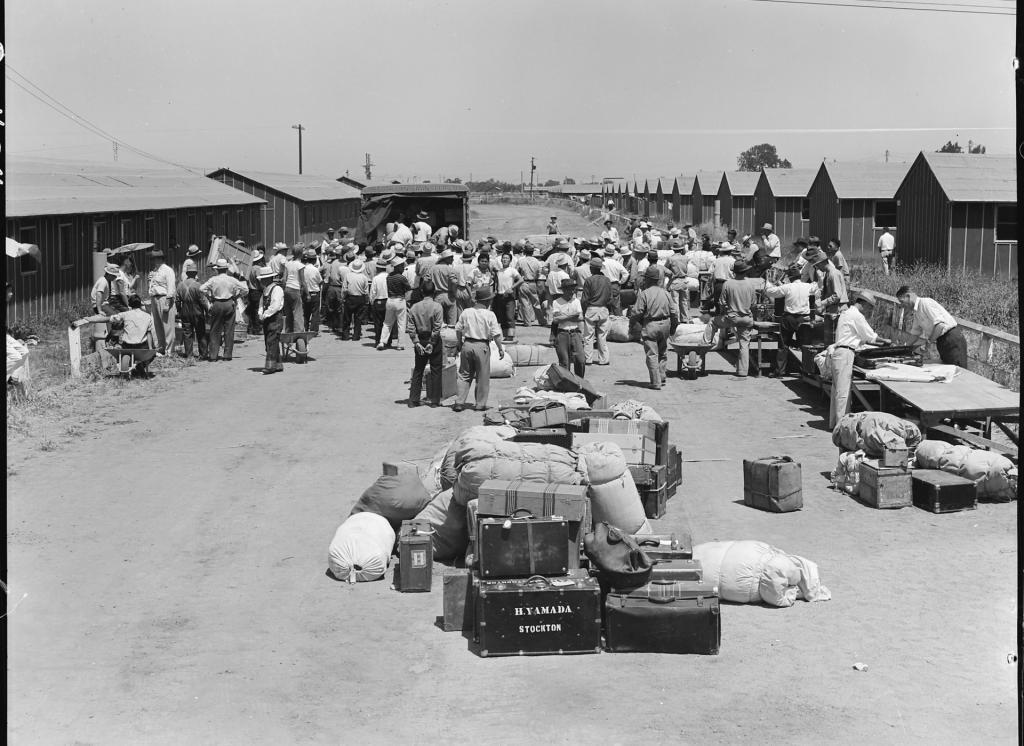
Another way Pearl Harbor is misremembered was the racist aftermath that engulfed the United States against the Japanese Americans who had already been living and working in the U.S. prior to the attack some for generations. In an article by Watanabe Toru for The Journal of American-East Asian relations5, people alive during the initial event in Pearl Harbor built a sense of racism against Japanese who already lived in America. This sense of blame for people not involved was not a new idea. Americans would do this again with middle eastern Americans after the attacks on 9/11/2001. This is a type of misremembering because when you blame people who were not to blame you cause a sense of confusion. With this narrative people build ideas of racism towards all Japanese. This idea of racism and blaming an ethnic group for the events of Pearl Harbor led to internment. Executive order 9066 was signed by FDR in 1942. This order was signed to approve relocation for Japanese Americans into internment camps. Originally it was voluntary, but it quickly turned involuntary. The difference is that learning about internment is not misremembering but invoking racism on all Japanese years after Pearl Harbor is misremembering. Forcing a historical sentence on ethnic groups previously responsible for atrocities is a factor for misremembering. The correct way to remember would be to remember the men who committed the atrocities or those who authorized it and the circumstances around it.
The best examples of remembering the correct information would be the online maps, timelines, and exhibits. This information is available to all who seek it. It is nice because the PearlHarbor.org website gives some online resources that are the same information you will get on the tours of the museum and memorial, which is the best way to remember Pearl Harbor. However, not everyone can do this, which is why I am focusing on the best digital tools to remember. PearlHarbor.org has a digital timeline of events in the western front from Pearl Harbor until Japan surrenders on the battleship Missouri. This is a good tool to see what events directly followed Pearl Harbor on the western front. They also have a list of articles that talk about what happened, what did not happen, and what could have happened if things went differently. This is a good tool for remembering because you can read about a bunch of topics on the attack itself. The Pearl Harbor website also includes survivor accounts. I think that a firsthand account is a profoundly good way to promote proper remembering of what happened. A lot of survivors had friendships and know the heroes that did not survive and that will give you the reality and gravity of the losses that took place that day. Another great tool for remembering Pearl Harbor properly is a short documentary called ‘Remembering Pearl Harbor‘6 by Tim Gray narrated by Tom Selleck produced by the World War II foundation. This short film takes stories from survivors of a lot of the ships including the USS Arizona and the story of a worker’s child who lived within eye shot of Pearl Harbor. This was a good way to remember because it shows the stories of the people who survived, those who witnessed, and incorporated interview footage of a Japanese pilot who participated in the attack. This was an interesting viewpoint because it showed that the Japanese pilot was asked back to Pearl Harbor twenty years later. There were some survivors asked to go and shake his hand and make peace, but it showed that some American soldiers would never forgive the Japanese soldiers while some could because they were simply taking orders. The best way to remember is to hear it from people who were there.
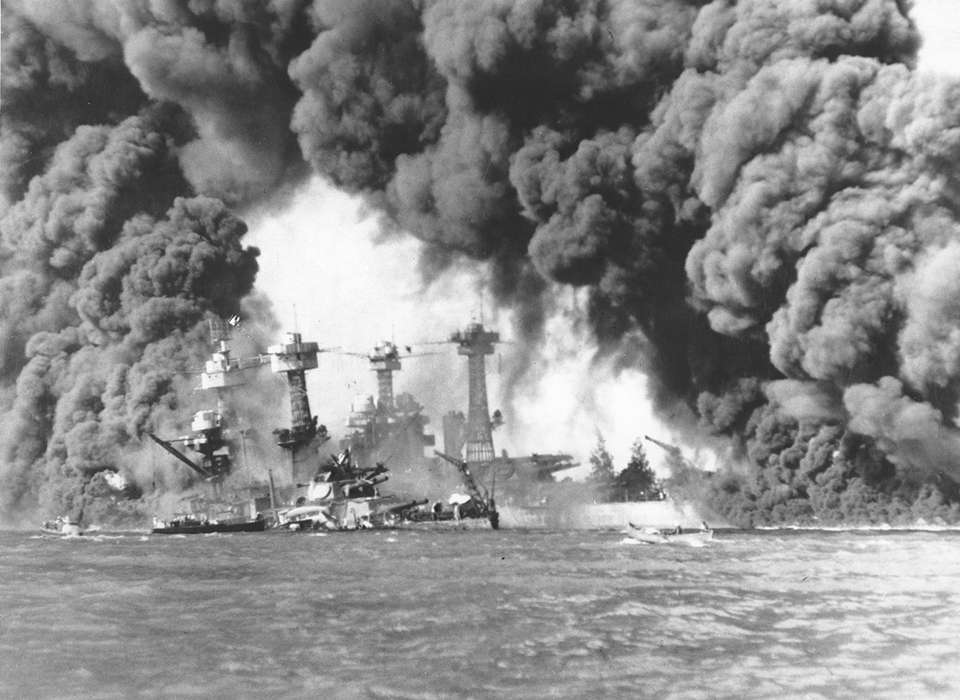
National WWII Museum (same as feature photo)
There is plenty of remembering and misremembering of all sorts of historical events. Pearl Harbor is one of those events that sometimes gets mixed up because of how long it has been since and what it means to certain people who talk about it. With so many ways to learn about historical events available to everyone because of the internet, it can be hard to decern what is misremembering and what is remembering. I think you can gain a lot of knowledge from focusing on vetted archives and museums who focus on the preservation of Pearl Harbor. I do not recommend Hollywood film to provide a visual depiction of historical events that were as recent as Pearl Harbor. There are primary source film and photographs to help provide visual context about Pearl Harbor. These will help provide the most background in order to remember correctly. I hope on this 82nd anniversary of this infamous day we all can take a moment to remember those lost and the history affected after correctly and fully. Here are a couple videos besides the forementioned documentary that provide resources in order to remember Pearl Harbor for the horrible world history altering event that it was through film.
Cite this article: Maggie Todd, ‘Remembering and Misremembering Pearl Harbor,’ Digital History at USC Aiken, 2023, https://digitalhistoryusca.com/2023/12/07/remembering-and-misremembering-pearl-harbor/.
- Pearl Harbor, Bay, Film, United States: Touchstone Pictures, 2001. ↩︎
- Pearl Harbor, Bay, Touchstone Pictures, 2001. ↩︎
- Pearl Harbor, 2001. ↩︎
- Pearl Harbor, 2001. ↩︎
- Toru, Watanabe. “1991: American Perceptions of the Pearl Harbor Attack.” The Journal of American-East Asian Relations 3, no. 3 (1994): 269–78. http://www.jstor.org/stable/23612537. ↩︎
- Remembering Pearl Harbor, Tim Gray, 2016. https://wwiifoundation.org/lesson/remember-pearl-harbor/. ↩︎


As a History major I love exploring all the intricacies of popular stories. It is almost never as black & white as often portrayed. Instead history is a tangled web of half-truths and hidden information. WWII is no different and we are still discovering new knowledge. I really enjoyed the post Maggie and thought you did a good job at explaining some little known facts.
LikeLiked by 1 person
I really enjoyed your post Maggie. I like how you use the movie as an example. I also like how you described the public’s reaction to both the movie and the event.
LikeLiked by 1 person
Hiya, Maggie! I find it rather interesting you chose to talk about Pearl Harbor. History can be so easily changed if you’re not preserving the truth well enough. I actually did my article on propaganda during World War 2 and much of what I saw and read did go over Pearl Harbor. It was a very important moment in U.S. history.
LikeLiked by 1 person
It is amazing that even in 1941, the United States were able to uncover encrypted message. This gave the United States awareness of something to happen. I would have never known this information without reading your post. I completely understand that after WWI the United States did not want to get into another conflict.
LikeLike